

























































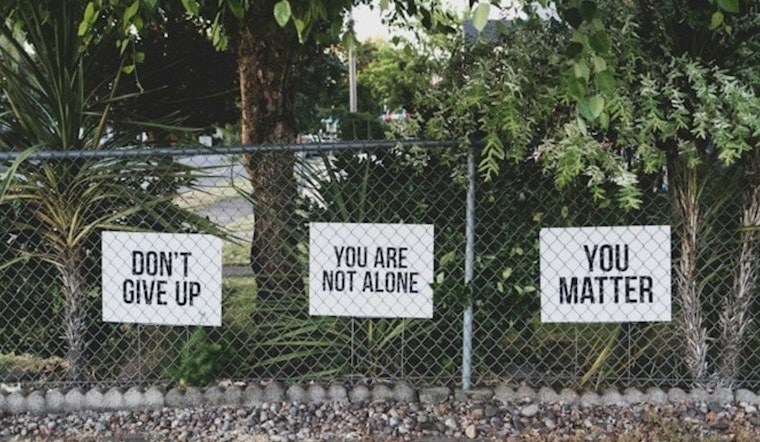
As September ushers in National Suicide Prevention Month, the stark reality emerges once more: suicide remains a leading cause of death in the United States, but, crucially, it is preventable. Highlighting this are initiatives aimed at building connections within our communities, a response to the surging tide of social isolation identified in last year's Community Health Assessment—as noted by the Bloomington Police Department's briefing—as a prominent issue plaguing our society.
Reinforcing the critical nature of mental health and its link to suicide risks, efforts are being made to foster relationships and support networks. Engaging in simple yet profound acts of community—such as reaching out to those around us, ensuring inclusion in local events, and advocating for the utilization of communal spaces like parks—are not just beneficial actions but life-saving ones. The goal is to create an environment where connections can thrive against the specter of seclusion that hangs over many.
In a statement released by the Bloomington Police Department, "Building connected communities can look like reaching out and checking in on friends, family and neighbors, inviting and including people in community gatherings and promoting the use of community spaces such as parks." This approach aims to weave a safety net made of bonds formed not just from necessity, but from a place of understanding and mutual care.
For those grappling with thoughts of suicide, assistance is within reach. Contacting the Suicide & Crisis Lifeline is as straightforward as dialing 988, while Cope Mobile Crisis offers help at 612-596-1223. Another resource, Fasttrackermn.org, provides additional support. For those seeking more information on suicide prevention, resources such as Save.org, Take5toSaveLives.org, and NAMIMN.org, remain available, offering guides, support, and education to individuals and families affected by this critical issue.




