

























































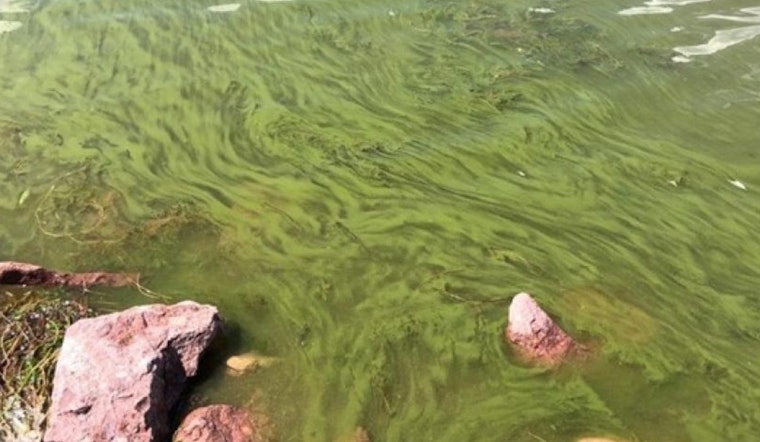
Residents around Boulder Reservoir have been advised to avoid contact with the water after a potentially harmful algae bloom was spotted, according to local officials. These cyanobacteria, commonly referred to as blue-green algae, can release toxins that are potentially hazardous to both humans and animals. The City of Boulder has taken immediate action, cautioning against water activities and instructing pet owners to keep their dogs away from the contaminated waters. As reported by the City of Boulder, signs will be posted around the reservoir, alerting the public to the health risks until at least October 31.
Despite the closure of the swim beach for the season, the reservoir remains open to watercraft. With the algae bloom present, the city has stressed that staff and visitors should avoid contact with water in affected areas as a precautionary measure, a telltale sign of an active bloom, including surfaces that resemble spilled bluish-green paint or a thick pea soup. Anglers are also warned upon catching fish to clean them thoroughly and properly dispose of the waste, following state guidelines. With areas where the water is bearing slimy, bright green strands or mustard yellow in color, though seeming hazardous, these are indicated as non-harmful algae by Boulder officials.
Interestingly, the Boulder Reservoir isn't currently in use as a city drinking supply, but it still plays a critical role for the Northern Colorado Water Conservancy District, which relies on it to provide water to other regions. Both city and district authorities are keenly coordinating their efforts to monitor and manage this environmental challenge. Water samples are being collected diligently by city staff, who are testing for the presence and concentrations of cyanotoxins. As the reservoir plays a pivotal role in supplying water downstream, this collaboration echoes the gravity of ensuring the bloom's effects are contained and mitigated.





