

























































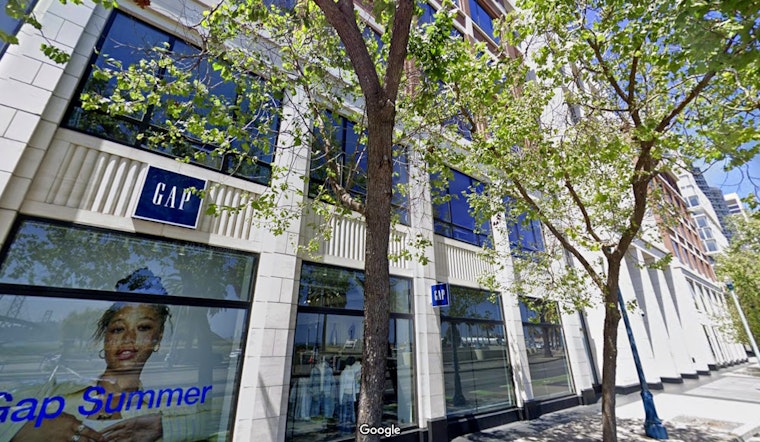
Gap employees walking into their downtown headquarters Monday morning for their first mandated five-day workweek since the pandemic found Julian Prince Dash in the lobby with sewing machines, ready to customize their clothes on the spot. It's exactly the kind of scene that captures how San Francisco is rethinking downtown recovery—not just filling offices, but making them worth coming back to.
The collaboration between the retail giant and Holy Stitch Factory Fellowship kicks off as the city experiences what feels like genuine momentum. Hotels are outperforming the rest of the country while other cities struggle with tourism decline. New restaurants are betting big on downtown foot traffic—everyone's fighting for the same 20 seats at the new fish counter in Ferry Building, and even the Ferry Building fills up again with eager restaurant tenants.
The city has been throwing everything at downtown revitalization: free concerts featuring Poolside and Shaboozey, outdoor movie series in Union Square, even legislation to convert empty offices into homes. But this Gap partnership feels different—it's not about attracting people downtown, it's about making the experience of being downtown genuinely compelling for the people who work there.
SF icon @Gap is bringing workers back to the office five days a week, and Julian from Holy Stitch is marking the moment with new designs for their employees. As offices fill back up, we're seeing downtown come alive again—with community and creativity leading the way. pic.twitter.com/ixLCVMhuxb
— Daniel Lurie 丹尼爾·羅偉 (@DanielLurie) September 2, 2025
The Unlikely Partnership That Actually Makes Sense
Julian Prince Dash isn't your typical corporate partner. The former graffiti artist, preschool teacher, and art therapist started Holy Stitch when a neighbor introduced him to her struggling son. "He brought his friends over, and they brought their friends over, and then all of this was born," Dash told The Standard.
What emerged was something unprecedented: a fusion of sewing school, social enterprise, and community activism center that teaches young people marketable skills while creating custom, one-of-a-kind garments. His approach emphasizes storytelling through clothing—Holy Stitch jeans feature hidden details like leopard-print pocket linings and text embedded in the fabric that tells each garment's individual story.
The organization has built credibility through high-profile collaborations with Dead & Company and custom installations at Outside Lands. Now, that same approach is being applied to corporate employees getting their hoodies and denim personalized while Dash's students learn real-world skills alongside them.
When Return-to-Office Actually Has a Point
Gap's February announcement about implementing a five-day workweek by September made headlines as yet another corporate retreat from pandemic-era flexibility. The company joined Salesforce, Amazon, and JPMorgan in tightening office attendance requirements, citing the need for collaboration and community building.
But unlike typical return-to-office mandates that feel punitive, Gap's partnership with Holy Stitch reframes the conversation entirely. Instead of simply requiring attendance, the collaboration creates genuine reasons for employees to want to be in the office—connecting them to local craftspeople, supporting workforce development, and offering personalized perks that can't be replicated from home.
The timing couldn't be more strategic. With only about a third of Gap's corporate workforce commuting regularly before the mandate, the company needed something more compelling than corporate speak about collaboration to bring people back.
Mid-Market's Creative Renaissance
Holy Stitch's location at 1059 Market Street puts it at the heart of Mid-Market's ongoing transformation. The neighborhood, long considered troubled, has become a testing ground for creative approaches to urban renewal. Dash's operation is supported by the Mid-Market Foundation, Market Street Arts, and the city's Office of Economic and Workforce Development.
"Jeans were invented in San Francisco, and it's time they are made here again," Dash said when opening his current location. The space serves as what he calls a "one-stop workshop" where people can develop their own brands, complete with design areas, studio lighting, and manufacturing capabilities.
Mayor Lurie's video documentation of the collaboration reflects his administration's bet that authentic community partnerships—not just policy mandates—will drive downtown recovery. As he put it in the clip: "Gap, thank you for leading the charge to get back to work in San Francisco. Let's go."
The Bigger Picture: When Corporate Policy Meets Community Building
The partnership represents something genuinely novel in corporate return-to-office strategies. Rather than typical amenities like fancy coffee or wellness programs, Gap chose to partner with a local nonprofit that combines workforce development with creative expression, creating value for employees, students, and the broader community simultaneously.
As Gap employees customize their wardrobes this week, they're participating in something larger than a return-to-office initiative—they're part of an experiment in how corporate policies can support local creative economies and workforce development. In a city still finding its post-pandemic identity, that kind of collaborative approach might be the thread that helps stitch downtown back together.





