

























































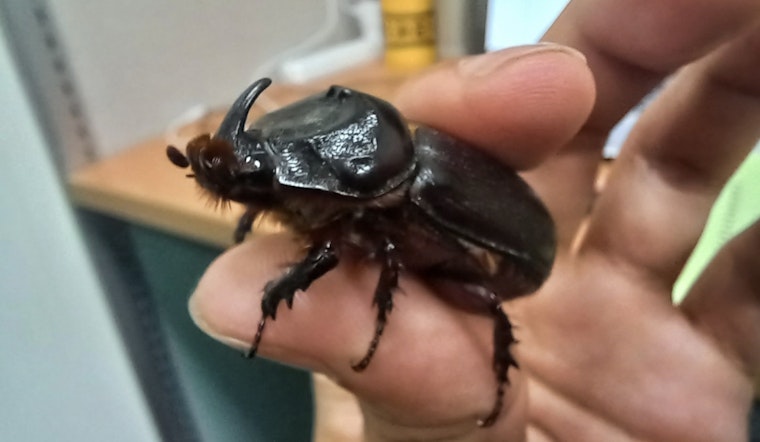
Efforts to control the invasive coconut rhinoceros beetle (CRB) on Hawai‘i Island have involved coordinated action by state and local agencies. According to the Governor's Office, operations have focused on Keāhole Agricultural Park (KAP). Between August 25–26 and Thursday through Friday of last week, a total of 144 tons of potential CRB breeding material were fumigated and removed from KAP through joint efforts by the Hawai‘i Department of Agriculture and Biosecurity (DAB), the Hawai‘i Department of Transportation, and the County of Hawai‘i.
The urgency of these measures stems from the detection of a major CRB breeding site at KAP back in late July. "Treating and hauling 144 tons of green waste is a colossal task," Sharon Hurd, chairperson of the Hawai‘i Board of Agriculture and Biosecurity, stated in the news release. This is not the first time KAP has undergone such treatment. An earlier fumigation event in mid-August had already attacked the green-waste piles at the site, with no CRB detected post-operation. This recent intervention serves as a critical safeguard, ensuring no resurgence of the pest occurs.
Local residents are being encouraged to comply with a voluntary order from Hawai‘i Island Mayor C. Kimo Alameda to cease movement of green-waste material from the compliance zone on the island's west side. It's part of the concerted efforts to curb the CRB's spread, which include the deployment of additional CRB detection traps and ramped up surveillance.
This week, the DAB and CRB Response teams are also deploying drones targeting palm trees in the Kohanaiki area, stretching their defenses against the beetle further into the landscape. The drones are part of an innovative approach to combat the spread of CRB, marking a technological step up from traditional ground methods. Local authorities continue to push for vigilance among communities and stress the importance of these actions to protect Hawai‘i Island's ecosystems and agriculture from the CRB threat.





