

























































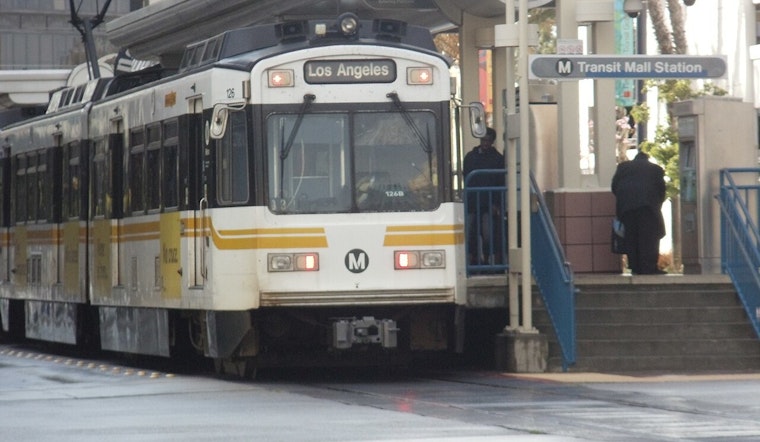
Los Angeles' Metro A Line extended its reach into the San Gabriel Valley on Friday, adding four new stations in a ribbon-cutting event that attracted local dignitaries and community members eager to witness the expansion of public transportation options for Glendora, San Dimas, La Verne, and Pomona. The extension signifies a major boost to connectivity in a region that, since the Pacific Electric Railway halted service in 1951, has gone without local rail service. NBC Los Angeles covered the event, capturing the fanfare as confetti cannons marked the occasion at the new Pomona North Station.
With the $1.5 billion infrastructure project completed, the Metro A Line now stretches an additional 9.1 miles, bringing its total length to 57.6 miles. As per ABC7, Metro's Deputy Chief of Operations, Edna Stanley, touted the travel-time advantage of the extension, claiming a commute to Union Station from the valley could now be done "within 58 minutes." This development promises to ease the notorious congestion on the 210 and the 10 freeways and provides a greener, more economical option for commuters.
The celebration was not just a formal ceremony but also a community event titled 'Rock the Rails,' featuring DJs, live bands, and food trucks representing the local flavors of the San Gabriel Valley. This demonstrates the intertwining of public space and community engagement in the fabric of transportation infrastructures. As FOX LA notes, Metro spokesperson Dave Sotero highlighted convenient park and ride lots and the availability of Foothill Transit buses for seamless connections to the Metro Line.
The strategic implications of the extension are highlighted in the context of Los Angeles preparing for the 2028 Olympic and Paralympic Games. The 'Twenty-Eight by '28' initiative aims, not only to improve Los Angeles County public transportation and infrastructure, but it also capitalizes on this moment to pave the way for a sustainable legacy that could endure long after the medals have been awarded and the global audience's attention shifts away. With Metro connecting the Pomona Fairplex, where cricket will make its historic return to the 2028 Olympics, to the larger public transit network, and an intersection with the Metrolink's San Bernardino Line, this project embodies a vision of interconnectedness that extends beyond the immediate Los Angeles County.
Funding for this ambitious project came from various sources: Measure M, Measure R, and a nearly $300 million grant from the California State Transportation Agency's Transit and Intercity Rail Capital program in 2018. As these efforts come to fruition, they serve as a testament to the efficacy of public investment in transportation as a catalyst for regional development and accessibility.





