

























































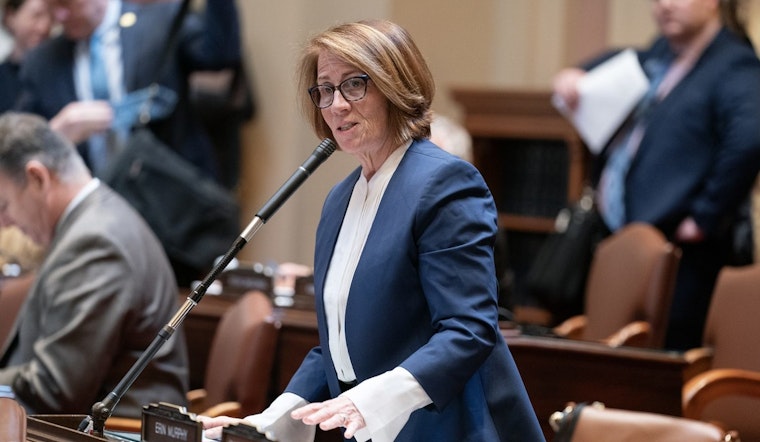
As debate stirs in Minnesota about addressing gun violence, Senate Majority Leader Erin Murphy has issued a call for bipartisan support for proposed gun violence legislation, according to a recent statement on the Senate DFL official website. Highlighting the urgency of the matter, Murphy stressed that the responsibility to pass gun violence prevention measures falls on both sides of the aisle, noting that Republican support is crucial to move any bill forward in the Senate.
In her statement, according to the Senate DFL website, Murphy emphasized that "Republican legislators whose districts support gun violence prevention have remained silent" and urged them to clarify their positions to their constituents. She acknowledged her DFL colleagues who are assessing their stance on the proposals and evoked the spectrum of conscience and representation that will guide their votes if the Governor calls a special session to address this matter, but she also made it clear that no bill can pass the House or Senate without GOP votes, signaling a need for a cross-party consensus on these critical issues.
The call for a special session comes as communities continue to confront the repercussions of gun violence and seek preventive measures. According to the Senate DFL announcement, the Majority Leader described this juncture as "an important moment for Minnesota," inviting Republican legislators to engage in the conversation and provide "serious solutions" for the public safety crisis at hand. The push for legislation reflects a pulse of public opinion that seems to be in favor of taking action on gun violence.
Minnesota's political landscape is now at a pivotal crossroads where the collaboration between Democratic and Republican lawmakers could enact significant change. Republicans find themselves with a choice to either join the effort and contribute to potentially saving lives or maintain their silence, which may only exacerbate the calls for change from the populace they were elected to serve. Erin Murphy and her Democratic colleagues appear ready to draft and debate the best possible bill with or without Republican engagement, but the stark reality, as Murphy puts it, is that substantial legislative action hangs in the balance, awaiting a nod from across the aisle.




