

























































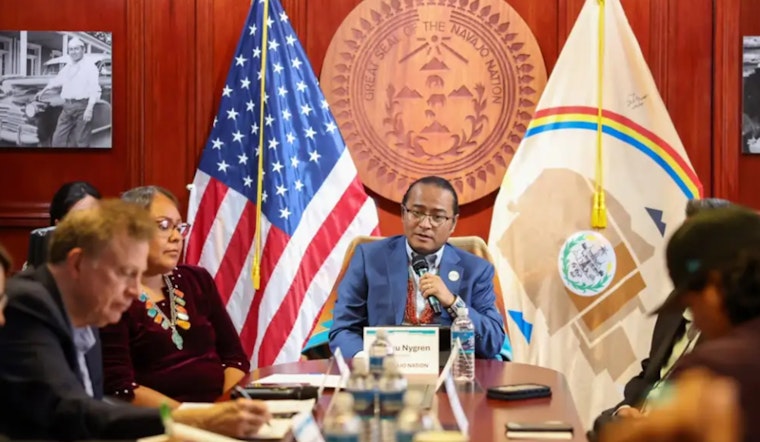
In what's being marked as an unprecedented move towards securing water rights for Indigenous tribes in Arizona, Navajo Nation President Buu Nygren was seen at the helm with fellow tribal leaders and government officials, plotting a course for the approval of the Northeastern Arizona Indian Water Rights Settlement Act. The setting was the stately State Room at the Office of the President and Vice President where discussions pivoted around a piece of legislation that's pivotal not only for its historic breadth but its cost-effective approach to a long-standing issue.
The Navajo Nation is set to secure a significant allocation of Arizona's Upper Basin Colorado River water to the tune of 44,700 acre-feet per year. President Nygren has been vocal about the importance of this settlement, citing previous talks in Washington with the Trump Administration as catalysts for the present momentum. "This is the largest water rights settlement that will serve the most amount of people," Nygren said, according to a report by the Office of the President and Vice President of the Navajo Nation. The deal also includes the leasing of water intra-state, a strategy aimed at providing stability to both the Navajo Nation and the basin.
Other tribal leaders also weighed in on the crucial nature of this settlement, Hopi Tribe Chairman Timothy Nuvangyaoma highlighted the urgency and necessity for his people especially when it comes to bettering water quality challenges. "I can’t express enough from the Hopi Tribe how important it is that this water settlement gets done through this Congress," he stressed in a statement captured by the same source. For the San Juan Southern Paiute Tribe, President Carlene Yellowhair pinpointed the crucial link between water access and the survival and sovereignty of her people.
A group of Navajo Nation Council Delegates, including Speaker Crystalynne Curley, Brenda Jesus, Otto Tso, Casey Allen Johnson, Vince James, Carl Slater, Germaine Simonson, Helena Nez Begay, Curtis Yanito, and Cherilyn Yazzie were present to lend their voices, advocating for the settlement that promises much-needed water rights to various Navajo communities. Part of the settlement, besides the Colorado River allocations, includes rights to all Little Colorado River flows reaching the Nation, and acknowledged rights to the Navajo and Coconino aquifers, a detail that points to significant strides in recognizing Indigenous authority over their resources.
As the conversation continues to unfold, involved parties await the formal sign-off from the federal Office of Management and Budget.



