

























































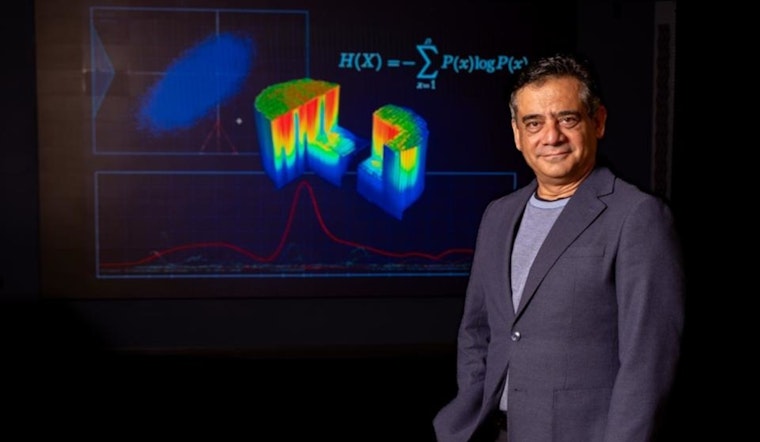
In an innovation that promises to streamline the development of next-generation nuclear energy, Oak Ridge National Laboratory (ORNL) has been granted a patent for a new validation methodology. As reported by ORNL, this technique utilizes the concept of entropy, commonly applied in telecommunications, to better identify which tests in the validation process are necessary, enhancing regulatory confidence in advanced nuclear reactors.
The traditional means of validating nuclear systems involve a laborious cycle of physical testing and subjective analysis, a process known to stretch timelines and bloat budgets. However, the team at ORNL, in collaboration with Purdue University, is changing the game. By using machine learning algorithms to pinpoint valuable experiments, the new approach aids in reducing redundant testing. Additionally, it sets precise criteria for the use of artificial intelligence and the employment of digital twin models—a cutting-edge tool wherein virtual replicas of systems evolve with live data feeds.
Highlighting the significance of this advancement, Ugur Mertyurek from ORNL told the laboratory's news team, "This work establishes entropy as the Rosetta stone for developing trust in computational models.” Mertyurek went on to emphasize the approach’s benefits, stating, “By identifying which data or experiments truly matter, we can cut licensing timelines down to a fraction of their current length while ensuring safety," as noted by ORNL.
With the collaboration yielding a patent co-developed with Hany Abdel-Khalik of Purdue University, the implications for the nuclear industry could be far-reaching. The adoption of such a method stands to not only economize the path to advanced nuclear technology but also to definitively outline the scope for computational models used in the sector. Researchers hope this will aid license applications, scale down project costs, and ensure a heightened level of safety in next-gen nuclear endeavors.





