

























































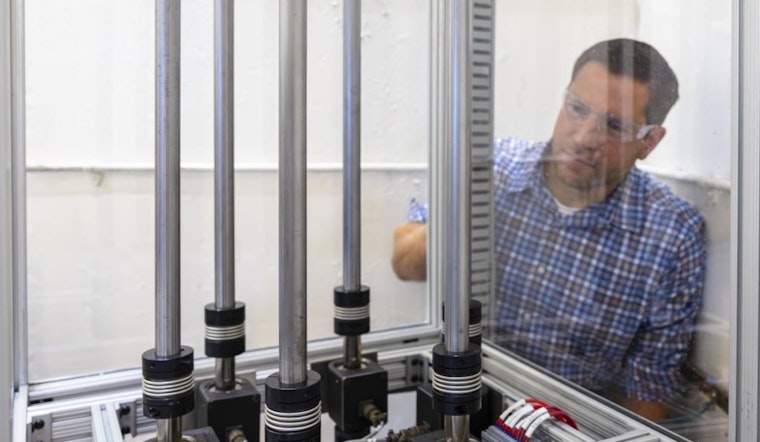
As humans eye the Martian horizon, the machinery that could get us there is being forged right here on Earth. Oak Ridge National Laboratory is spearheading efforts to make nuclear energy a viable power source for space expeditions. A new test bed has been developed that simulates the unique conditions of a space nuclear reactor without the reactor itself. This innovative "hardware-in-the-loop" system allows engineers to design and test autonomous controls, a crucial feature for space-bound reactors that can't rely on real-time human oversight, as mentioned in the Oak Ridge National Laboratory News.
Mimicking the harsh environment of outer space here on Earth comes with its own set of challenges. Oak Ridge has met these issues head-on, crafting a setup that weaves hardware with computer modeling. According to Oak Ridge's Brandon Wilson, the test bed serves as a crucial proving ground: "Our test bed gives engineers the ability to push autonomous control systems to their limits in a safe, repeatable environment," he told Oak Ridge National Laboratory News. "That means we can identify and solve problems here on Earth — before astronauts rely on these systems millions of miles from home."
Space exploration, particularly the long-haul trips to Mars, necessitates a power source robust enough to withstand the journey's duration and conditions. NASA's keen interest in this technology has led to funding from its Marshall Space Flight Center, with Dianne Ezell at the helm of the Space Nuclear Program. The success of these nuclear reactors hinges on the sophisticated autonomous systems that, as Oak Ridge's tests have determined, can now be parsed through with less cost and fewer regulations.
The utilization of non-nuclear components and open-source software at ORNL aims to reduce costs and support faster development in space technology. The lab has also built a non-nuclear test bed that simulates space nuclear reactor conditions, addressing safety and innovation concerns in the industry.





