

























































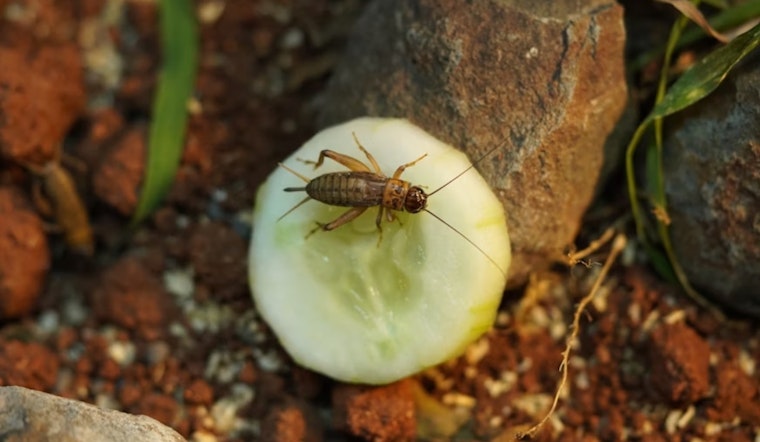
When it comes to the battle of the sexes among crickets, it looks like males and females have different strategies for the game of life. Researchers at The Ohio State University found that while female crickets focus on investing in their reproductive organs, male crickets are all about bulking up and storing energy – possibly to better their chances in the competition for a mate. This discovery was made during a lab study and recently shared in an article by OSU News.
Scuttling forward with the details, the study, published in the Journal of Experimental Biology, explains that investing resources is a critical decision for any living creature. According to Madison Von Deylen, a PhD candidate at Ohio State's Department of Evolution, Ecology and Organismal Biology, "Any organism is going to face these trade-offs between allocating limited resources: Should I invest in growth? Should I build up fat stores? Or should I transition energy into some kind of reproductive output?" Von Deylen told OSU News. It seems in the cricket world, males go for the former options, while the ladies direct their nutrients towards their future offspring.
This study didn't just pop these insects under a microscope and hope for the best. A structured methodology was employed: half of the 75 crickets reared for the study were allowed the opportunity to mate once they reached adulthood. These couplings were monitored to ensure that the bump and grind of cricket love actually took place. The careful observation was intended to examine if mating affected how these insects allocated their resources. It's a point of curiosity since in the wild, male crickets would be duking it out for female attention – a scenario that didn't play out in this controlled environment.
The differences in how mated and unmated females allocated resources were particularly highlighted. "We found a trade-off between the amount of fat that individuals had and the gonad size in mated females, which made a lot of sense because mated females will start taking that fat and using it for egg development," Von Deylen explained via OSU News. Males, on their part, didn't show as much of a shift, whether they had mated or not. Their reproductive success fares more on traits they acquire before hitting their bug puberty, like size, which factors more significantly in them getting a chance to mate in the first place.
With ample food and no predators to fear, these lab-grown crickets had it easy compared to their wild cousins, simplifying the analysis of sex-specific life strategies. It sheds light on the evolutionary pressures these strategies might be under. "This gives us a lot of good information about what kind of pressures that these different life history strategies are evolving under," Von Deylen concluded to OSU News.



