

























































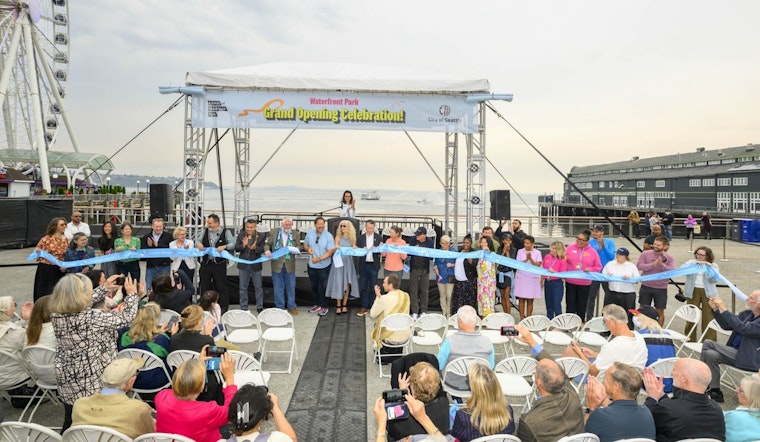
Seattle's waterfront has officially received a massive facelift. In what's being hailed as the city's most significant civic transformation since the 1962 World's Fair, the new Waterfront Park is now open for public enjoyment, as Mayor Bruce Harrell's office announced. Spanning from Belltown to Pioneer Square, the park stands as a testament to the city's resilience and commitment to urban reinvigoration.
The park is more than a scenic retreat—it offers cultural experiences, green spaces, and improved bike and pedestrian access across its 20 acres. Its creation stemmed from both necessity and innovation. After the 2001 Nisqually earthquake exposed the seismic dangers of the Alaskan Way Viaduct, the city launched a $4 billion investment in public infrastructure, as per the Office of the Mayor. Leading the effort, Seattle’s Office of the Waterfront and Civic Projects oversaw the design and construction of this massive undertaking, which includes new piers, seismically reinforced roadways, and restored natural shorelines.
The community festival marking the park’s opening highlighted its many features—from strolls along the Park Promenade to the elevated green space of Overlook Walk. Cultural expression also plays a central role, with public artworks by 16 artists reflecting the city’s history and values. The Friends of Waterfront Park, the nonprofit steward of the space, will continue to nurture its cultural vibrancy through partnerships and programming, according to the Office of the Mayor.
In his statement, Mayor Harrell encapsulated the significance of the park's creation, saying, "This achievement is the product of decades of vision, commitment, and collaboration by community members, civic leaders, workers, and builders." Such remarks reflect the overarching narrative of the park, built on decades of arduous, often unseen labor, to deliver what stands today – a living testimony of Seattle's commitment to urban evolution and sustainability. Moreover, its strategic relevance is underscored as Seattle gears up to be a host city for the 2026 FIFA World Cup, ready to serve as a potent symbol of the city's revamped identity to visitors worldwide.
In line with the city's broader vision, the Waterfront Park also serves eco-friendly goals. According to the Office of the Waterfront, nearly a thousand trees and over 150,000 plants have been added, and advanced stormwater systems will treat up to 7.5 million gallons annually, ensuring the preservation and enhancement of Elliott Bay's natural ecosystems, the Office of the Mayor notes. The combination of public art installations and functional design, coupled with Seattle Center's role in the operational end, ensures the park's status as a multipurpose civic beacon.





