

























































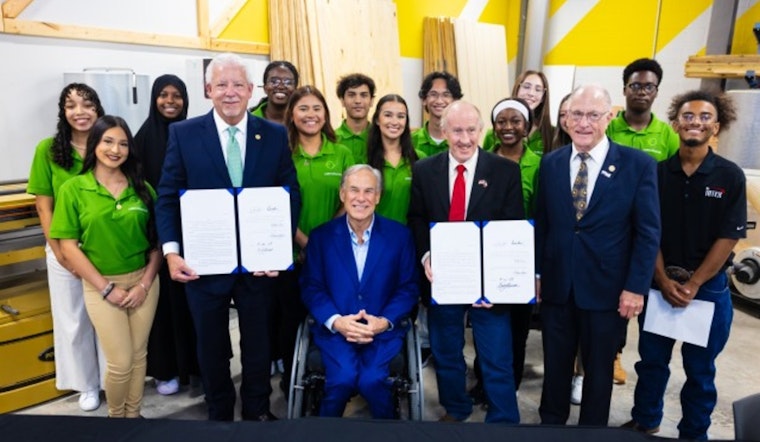
Texas Governor Greg Abbott has put his signature on legislation that aims to broaden the scope of career and technical education for students throughout the state, going beyond traditional pathways to post-secondary success and into realms of practical and vocational training. According to a recent announcement from the Office of the Texas Governor, House Bill 20 and House Bill 120 are the keystones of this initiative, designed to give high school students, particularly those in grades 11 and 12, a chance to earn diplomas while concurrently racking up certificates through higher education partnerships.
This development is not just a potential catalyst for individual prosperity but also a strategic bolstering of the state's economic muscle, "Career training is a game-changer for our students, for our state, and for our employers," Governor Abbott declared, according to Officie of the Texas Governor, underlining the over $7 billion poured into such programs in Texas recently, and these investments, he suggests, serve to both modernize the workforce and reaffirm Texas’ stature as a global economic contender. The ceremony saw figures such as Senator Bob Hall, Representative Gary Gates, and Forney ISD School Board President Greg Pharris in attendance, lending their support for what the Governor sees as an emergency item to prepare Texas' workforce for not just today’s jobs but also for those that lie over the horizon.
House Bill 20 ushers in the Applied Sciences Pathway Program, which offers students the ability to substitute traditional high school graduation credits with vocational course credits, effectively syncing education with evolving industry requirements. As Abbott noted during the bill signing, "In just the past two years, the State of Texas has invested more than $7 billion in career training programs across Texas" – a sum that underscores the magnitude of these initiatives, as reported by the Office of the Texas Governor. Concurrently, House Bill 120 sharpens the focus on college, career, and military readiness in the Lone Star State's public schools, boosting access to high-quality technical education and enhancing college and career advising by ensuring that counselors use the most current workforce data.
The legislation was received positively by industry stakeholders, educators, and political figures alike, calling it a necessary adaptation in a rapidly shifting economic and educational landscape, especially as Texas continues to foster an environment where job creation and consequently the opportunity for bigger paychecks through career training investments are amplified, according to the Governor, "Texas is the blueprint for America's economic success."



