

























































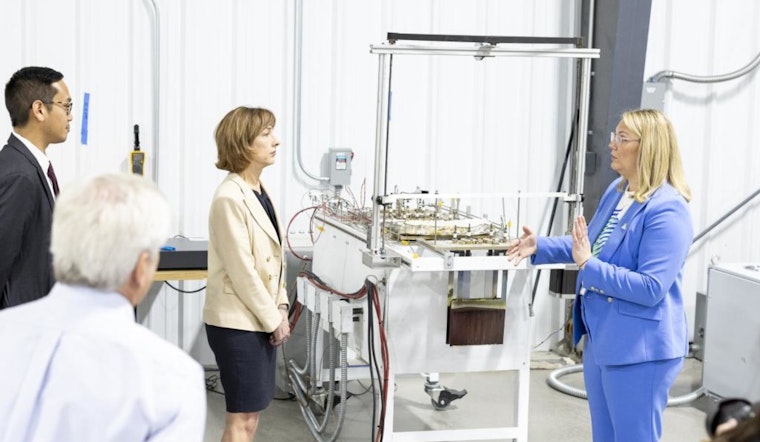
The U.S. Air Force has recently made a move that reflects its commitment to fostering innovative technology solutions domestically. In a significant contract award, they have backed an ambitious project that aims to transform carbon dioxide into high-quality carbon nanotubes designed for battery-grade graphite applications. The startup at the helm of this initiative, SkyNano, has been granted $1.25 million to carry this vision forward. Notably, the company is led by Anna Douglas, an alumna of the Innovation Crossroads program based at Oak Ridge National Laboratory (ORNL).
SkyNano is not to tackle this project by itself. Alongside them, American Energy Technologies Company and Eonix, steered by Don DeRosa, another Innovation Crossroads alumnus, will join forces to collaboratively spearhead this advancement in battery material technology. This partnership appears to seamlessly blend expertise to potentially create breakthrough developments in the energy sector. Innovation Crossroads, as per ORNL's programs, seems to not only provide rigorous technical support but also connect entrepreneurs to forge such collaborative efforts.
The crossroad of innovation and entrepreneurship is a well-traveled path for alumni of ORNL's specialized program. As Dan Miller of ORNL summarized, "In addition to accessing world-class technical resources, Innovation Crossroads Fellows are connected with a peer network of early career energy and manufacturing entrepreneurs." It points out a thriving ecosystem that's been cultivated in East Tennessee, one that has persuaded companies like SkyNano and Eonix to set down roots and expand their operations in the local community.
Anna Douglas, speaking about the importance of this recent development, emphasized the broader impact it holds. "This project not only represents an important step toward building a secure, domestic supply chain for lithium-ion battery materials, but also continued collaboration and growth among Innovation Crossroads Fellows," she said. As detailed by ORNL, this collaboration seems to be a natural progression of a shared vision that was likely nurtured during their time in the program.
The contract award by the Air Force and the combined capabilities of these rising entrepreneurial endeavors signal a strategic push to not only advance energy technology but also bolster the nation's self-reliance in critical materials for the energy industry.





