

























































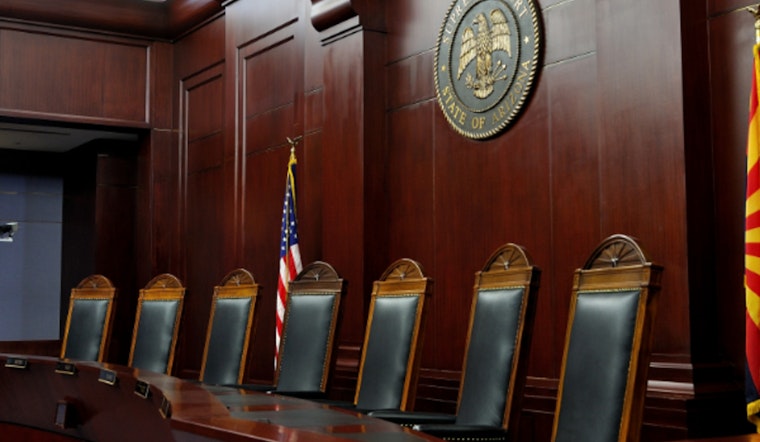
In a recent decision that holds significance for medical malpractice claims in Arizona, the state's Supreme Court has reversed a lower court's judgment in a case involving the alleged negligence in an emergency room setting. The case, Henke v. Hospital Development of West Phoenix, Inc., et al., concerns Margarita Henke's lawsuit following the death of her husband, Greg Henke, due to complications from bacterial endocarditis. According to a summary by the Arizona Supreme Court, the issue at stake was whether the expert testimony provided met the 'clear and convincing' evidence standard required by Arizona statute A.R.S. § 12-572.
Greg Henke's initial visit to urgent care raised suspicion of bacterial endocarditis, prompting the urgent care doctor to send him to the emergency room with an advisory note. The defendants, however, doubted these suspicions and discharged Greg after attributing his symptoms to a viral condition, days before his death. The original trial court found in favor of the defense, based on the claim that Margarita's expert testimony did not pass the rigorous 'clear and convincing evidence' threshold. The court of appeals affirmed this judgment.
In a unanimous verdict, however, the Arizona Supreme Court turned the tables on this reasoning. They stated, "a plaintiff’s medical malpractice claim in the emergency medicine context does not fail as a matter of law solely because the plaintiff’s expert witness testifies that the negligence 'likely' caused the injury." The Court insists that § 12-572 does not alter the fundamental requirements of a medical malpractice claim. It simply demands a more stringent level of proof regarding causation. Justice Kathryn H. King, writing for the Court, stressed the sufficiency of the medical expert testimony, provided it ties the alleged care lapse directly to the patient's injury without leaving the jury to guess at causation.
The delineation by Justice King is pivotal, especially for future cases where emergency room medical malpractice is alleged. While the higher standard of proof remains intact, the Court's clarification ensures defendants are not granted judgment purely on the medical expert testimony, and other admissible evidence is also pivotal in establishing causation. The decision effectively returns the power to the hands of the jury, demanding a holistic examination of all evidence. The decision also sends a clear message: medical expert opinions, even if couched in terms of likelihood, should not be dismissed out of hand when a patient's life or well-being is at stake. Justice King's full opinion has been remanded to the trial court for further proceedings, marking a potentially significant shift in the medical malpractice landscape in Arizona.





