

























































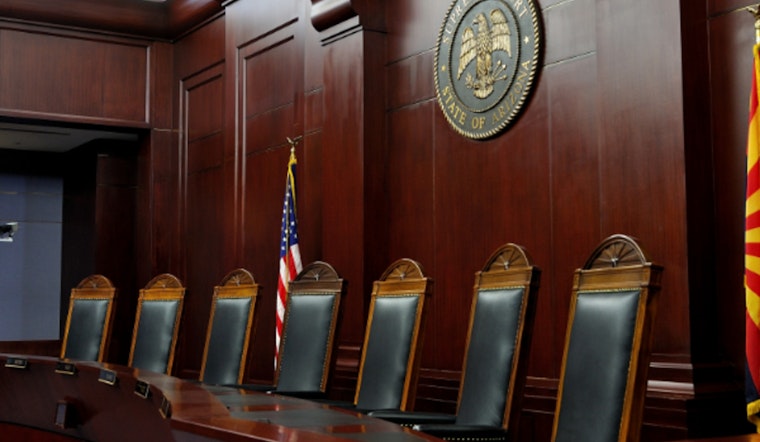
The battle over the administration of Arizona's election laws has come to a decisive close, as the Arizona Supreme Court has issued a unanimous ruling in favor of the Secretary of State, Adrian Fontes. The court found that the state's Administrative Procedures Act does not apply to the creation of the Elections Procedures Manual (EPM), a guide crucial to conducting state elections.
In what could easily be a nod to a legacy of bipartisan consensus, the court's decision effectively supports the stance that Arizona's Legislature established a distinct process for the EPM that stands independent of the broader rule-making framework. "The rule of law has prevailed," Fontes was quoted as saying in a statement obtained by AZ Secretary of State's office. "The Court's unanimous order confirms what every Secretary of State, Republican and Democrat alike, has always understood."
For nearly a year, election officials had to divert resources to defend against a lawsuit deemed by some as politically motivated. In a clear relief, Fontes stated the case was more about "creating confusion and scoring political points at the expense of our democracy" than enhancing the election process. By confronting this lawsuit, the Secretary of State's office aimed to maintain focus on ensuring Arizona's elections are secure, transparent, and lawfully conducted.
Historical precedent has been a strong undertone in this case, with no previous Secretary of State opting to use the Administrative Procedures Act to promulgate the EPM. Even former Secretary Ken Bennett, a Republican, backed this practice by filing an amicus brief. The court's confirmation means to peacefully continue the office's work as the Secretary of State's office submitted its final draft of the 2025 EPM to the Governor and Attorney General for approval. They have until the end of the year to finalize everything, ensuring readiness for the 2026 election cycle.
While not statutorily required, the Secretary of State's office showed commitment to good governance by conducting a public comment period on the EPM. This move, according to Fontes, underpins the belief that "good governance demands transparency and public input"—principles crucial for maintaining public trust in the electoral process. The upcoming 2026 elections will now proceed under this latest iteration of the EPM, shaped by these preceding legal and administrative affirmations.





