

























































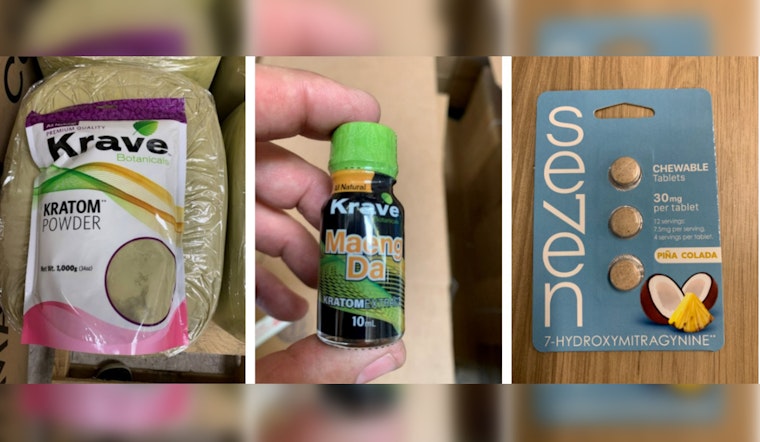
The California Department of Public Health (CDPH) is raising red flags for consumers about the risks associated with kratom and 7-hydroxymitragynine (7-OH) products, as reported by a recent warning on their website. In an explicit advisory, CDPH emphasizes that these products are linked to serious health issues such as addiction, overdose, and even death, marking them as both dangerous and unlawful for sale or production.
Despite being illegal, kratom and its derivative 7-OH, a powerful compound extracted from the same plant, remain accessible across a variety of sales points, including gas stations, smoke shops, and online retailers. Dr. Erica Pan, CDPH Director and State Public Health Officer, stressed the severity of the situation in a statement obtained by the CDPH, cautioning that "Although illegal to sell or manufacture, we are still finding kratom and 7-OH products for sale," these products masquerade as natural solutions but can lead to fatal overdoses, and the best self-protection is abstaining from their use.
A grim tally of six fatal overdoses linked to 7-OH since April 2025 in Los Angeles County underlines the potential lethality of these substances. CDPH outlines that neither kratom nor 7-OH has legal clearance in the U.S. as a drug, dietary supplement, or food additive, and any claims touting their efficacy in treating pain, anxiety, or opioid withdrawal are scientifically unfounded. Detailed side effects include, but are not limited to, withdrawal symptoms, insomnia, anxiety, seizures, and life-threatening respiratory depression.
In response to ongoing incidents, CDPH continues its commitment to Californians' safety by conducting rigorous investigations, seizing, and eradicating kratom or 7-OH-containing products from consumer outlets and production sites; once located, these products are typically either embargoed or destroyed, demonstrating the seriousness with which the department is approaching this public health concern. Consumers are advised to be vigilant with product labels to avoid inadvertent consumption of these substances, and the availability of over-the-counter naloxone—a medication that reverses opioid overdoses, which includes 7-OH—is highlighted as a critical emergency resource.
Californians are urged to report any sightings of kratom or 7-OH products in retail settings to the CDPH Complaint Hotline or through their online platform, in addition to contacting Poison Control or a healthcare provider if adverse effects are experienced. Time is of the essence in cases of overdose; awareness of signs and prompt response with naloxone administration and emergency services contact can save lives. Further details on how to protect oneself can be found at the link: CDPH Warning.




