

























































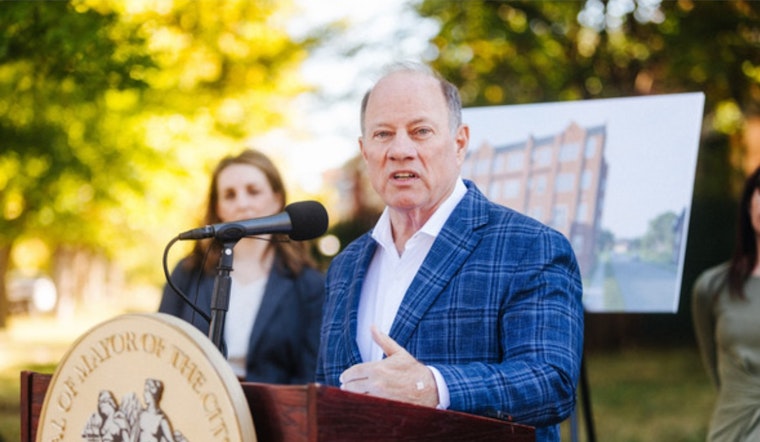
Detroit's landscape of affordable housing is transforming, springing from the seedbed of an innovative fiscal policy known as the PILOT Fast Track ordinance. Nearly a year after the city council enacted the measure, Mayor Mike Duggan, flanked by council members and community stakeholders, reported a burgeoning crop of housing units for lower-income residents. In numbers, 2,400 vetted housing units have been approved, pooling close to an estimated $0.5 billion of development capital. Echoing through the industry pipeline, applications for another 6,000 units await approval, with a price tag of around $1.1 billion in prospective investments, according to Detroit's official announcement.
Under this ordinance's rubric, developers receive property tax cuts for guaranteeing affordable dwelling space, trapping a spectrum of reductions based on the depth of affordability, with major savings for those who earn below 60% of Area Median Income. Mayor Duggan underscored the scheme's potency, stating, per the City of Detroit, "Nowhere in America will you see the pace of affordable housing development move faster than here in Detroit." Developed to supersede the sluggish year-long waits for incentives, the PILOT affords a streamlined approval process, which Mayor Duggan claims could scatter approvals in under 60 days. A recent project in the Dexter-Linwood neighborhood epitomizes this new stride; a lifeless structure will see rebirth as 34 residential units, armored with a robust 95% snip in predicted property taxes.
"The PILOT ordinance represents what happens when we center policy around people," City Council President Mary Sheffield declared in a sentiment reflective of the program's community-minded orientation. She believed firmly in the instrumentality of the PILOT program in cementing over 2,300 housing units for residents. Councilmember Fred Durhal added his voice to the chorus of approval, referencing the PILOT as a cornerstone for fostering accessible housing without compromising economic feasibility for developers, as gleaned from the City of Detroit.
Complementing the tax reductions are layers of support the PILOT program extends to developers, from virtual office hours to staff liaison support. Central to ensuring the program's longevity, these measures buffer the vibrancy of local neighborhoods by repopulating and preserving their historic fabric. Detroit's Housing & Revitalization Department, through Director Julie Schneider, has described the PILOT as "essential to making affordable housing financially feasible in Detroit," instrumental in delivering a diverse spread of affordable units. Schneider's words mirror the ledger of recent approvals like The Residences at St. Matthew and Midblock, primed as they line up to join the parade of projects, marrying the city's vision with the stark concrete of urban life, as highlighted by the City of Detroit.


