

























































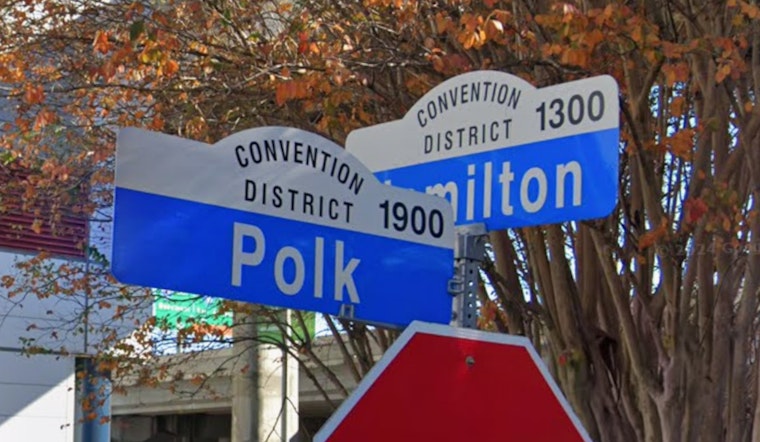
As Houston grapples with its identity and future, the Houston City Council is on the brink of a decision that could permanently reshape the East End's connection to the city's beating heart. Community members have raised their voices in a bid to halt the proposed abandonment of a key stretch of Polk Street, a move that could make room for the expansion of the George R. Brown Convention Center and accommodate the Texas Department of Transportation's I-45 project. "We are not against the expansion of the George R. Brown," East End resident Scott Singleton said in a Click2Houston interview. "We are against them doing it so that it permanently cuts off the East End from the rest of the city."
The concerns are not to be dismissed lightly, cutting across more than just the East End's borders. They weave a narrative of disconnection, a repetitive tale of urban development seemingly putting the needs of residents as secondary to those of tourists and large-scale projects. "Anybody who comes to a Rockets game at Toyota Center, anybody who comes with their kids to play at Discovery Green, anybody who comes to the convention center — they use Polk Street," Ian Hlavacek, an East End resident, expressed in Click2Houston. The plea is simple: to remain part of the evolving cityscape, yet not be sidelined in its march towards progress.
However, Houston First Corporation asserts the closure as a necessary step in a much larger scheme. According to their statement, the closure aligns with the North Houston Highway Improvement Project's (NHHIP) complete vision, for which Houston First has "committed to working together with Houston Public Works to convert Leeland Street to a two-way configuration." They anticipate that this project, in conjunction with a traffic study showing "minimal additional travel time," will effectively mitigate the community's concerns within 12 months, as mentioned in a Click2Houston report.
Contrasting perspectives, like those expressed in an opinion piece in the Houston Chronicle, argue that the city's investments should reflect the interests of its residents first and foremost. The article posits that the $2 billion earmarked for the GRB expansion and new hotel could be better used toward infrastructural and cultural advancements for Houstonians. "This isn’t just about fiscal responsibility. It’s about vision. It’s about choosing to build a city that works for the people who live here — not just the ones who visit for a weekend," the article asserts, questioning the priorities being set in place by civic planners.




