

























































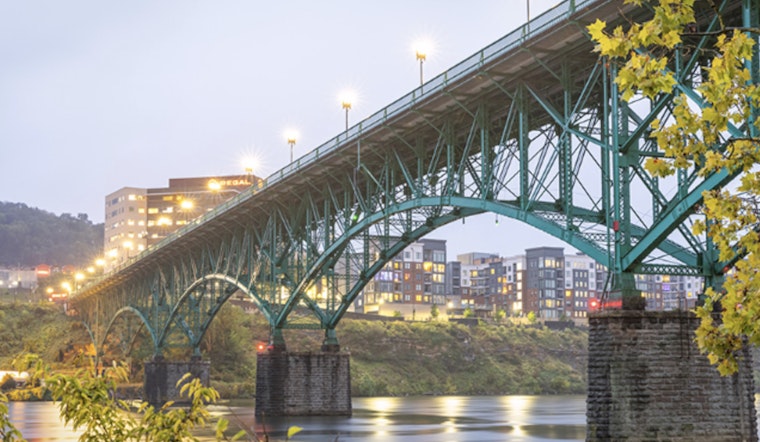
The Knoxville City Council has greenlit two significant engineering endeavors, as announced on October 14: the creation of a greenway connecting Fort Sanders to Tyson Park and a traffic study examining the repercussions of the Gay Street Bridge closure. These initiatives, aimed at enhancing both transportation and recreation in the city, mark a significant push towards Knoxville's infrastructural improvement.
A detailed greenway is set to emerge, designed by CDM Smith, which will offer both cyclists and pedestrians an innovative passage linking the Fort Sanders neighborhood with the Tyson Park, through Third Creek Greenway, and extending to a broader network of greenways, the project includes a unique tunnel passing under the elevated CSX railroad tracks around Clinch Avenue, and, this plan was classified as critical back in a 2015 City Bicycle Facilities Plan, where it took second place out of 120 projects. The city has committed up to $980,770 for the design services contract, while the Knoxville Regional TPO 2050 Mobility Plan forecasts the total project expenditure, inclusive of property procurement and construction, to reach around $9.3 million.
The unfolding scenario surrounding the Gay Street Bridge, which closed in June 2024 due to its structural deficiencies, has prompted the city to explore the subsequent changes in traffic flow with a comprehensive $96,100 study. In a report by The City of Knoxville's official website, the study will consider an array of factors including evaluations of traffic patterns before and after the bridge closure, which will involve both a web-based survey to gather community insights and a cost-benefit analysis, these findings will steer future decisions on whether to construct a new bridge and what form it should take, and CDM Smith has been identified as the most qualified candidate among four contenders to conduct this study.
Currently, the aged Gay Street Bridge stands compromised, unable to bear the burden of motorized transit. However, a $2 million lifeline in the form of stabilization repairs is projected to have the bridge operational, albeit only for the unhurried tread of bicycles and pedestrians by year's end.





