

























































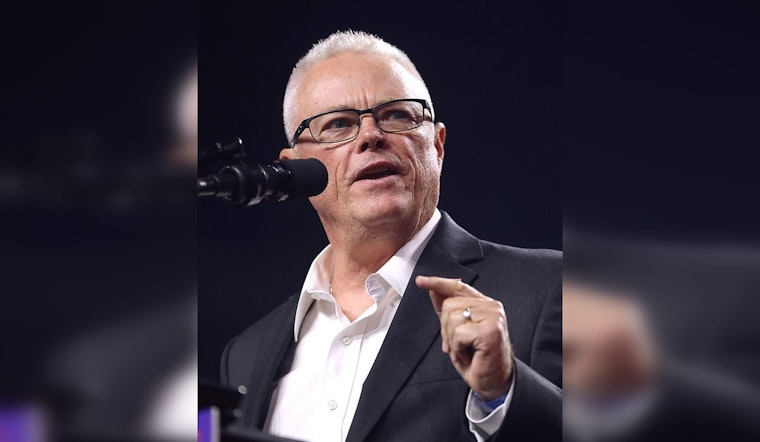
Maricopa County Sheriff Jerry Sheridan is pushing back against claims from an audit that suggests the Sheriff's Office has significantly overreported the costs associated with complying with a federal oversight program. The program, stemming from a racial profiling lawsuit that found MCSO had discriminated against Hispanic drivers, has been in place since 2013 under the auspices of the Ortega Melendres case.
According to a report by FOX 10 Phoenix, the audit alleges that $160 million billed to the county for oversight-related expenses was, in fact, spent on items not directly related to the program, including surplus vehicles, body cameras, and even a golf cart. The audit also highlighted that over 70% of reported federal compliance costs may have been for unrelated expenditures. In defiance, Sheriff Sheridan is seeking to outrightly discredit the audit report. "I don't think there is any mislabeling of funds, I don't give the monitor's report any credibility whatsoever," he said in defense of his department's accounting practices.
During a KTAR News 92.3 FM interview reported by KTAR News, Sheriff Sheridan voiced concerns over the audit's reliability, criticizing the auditors' qualifications and planning to bring in qualified accountants to reevaluate the findings. "We’re going to ask ... for an extension of that because we're going to have to hire people because they don't believe our people, right? … So, we’re going to have to hire somebody that's a CPA to take a look at it that's familiar with government operations," he explained.
The MCSO, meanwhile, continues to assert that it has effectively curtailed practices of racial profiling and bias, with Sheriff Sheridan emphasizing the absence of such behavior for over a decade. "There has been no racial profiling or bias in well over 10 years, and that’s the gist of this lawsuit, right, is the judge didn’t want MCSO to racially profile or be biased," Sheridan told KTAR News. However, ACLU representative John Mitchell stated to FOX 10 Phoenix that MCSO still needs to address "potential signals of bias with the alarming increase in traffic stop extensions disproportionately for minority drivers."
MCSO has a 30-day window to formally respond to the audit's findings, a timeline that Sheriff Sheridan suggests may need extension to thoroughly vet the concerns raised. With a significant $32 million having already been spent on the monitoring process over 11 years, as pointed out by Sheridan, the financial implications of the audit's allegations and MCSO's response are not just of local importance, but also of interest to the taxpayers diligently following the unraveling fiscal and judicial saga.





