

























































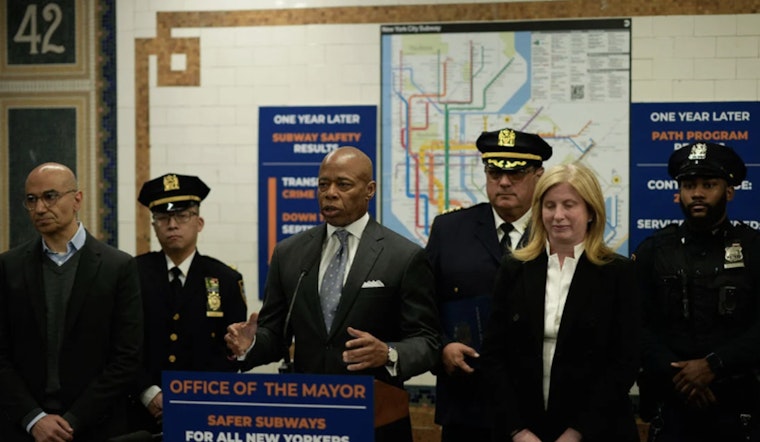
New York City Mayor Eric Adams marked the one-year milestone of the Partnership Assistance for Transit Homelessness (PATH) program yesterday, an initiative launched in August 2024 that aims to connect the city's subway-dwelling homeless population with essential services ranging from shelter to health care. Mayor Adams' administration and senior city officials highlighted the more than 20,100 interactions PATH teams have had with individuals in need, marking a milestone that supports the mayor’s broader effort to address disorder and improve public safety.
According to a statement from the Mayor's office, PATH is a response to not only the homelessness crisis but also to the broader issues of public safety and quality of life within the subway system. Combining the efforts of NYPD Transit Bureau officers, nurses from the Department of Homeless Services, and outreach staff, the program operates from 8:00 p.m. to 12:00 p.m. the following day, targeting Manhattan stations and trains. The partnership, which the mayor's office stated has facilitated 6,100 critical service deliveries, extends into clinical realms too, where police officers receive crisis de-escalation training, and clinicians are empowered to take the lead in safety-assured situations.
The collaboration doesn't stop with NYPD and city health workers. DSS Commissioner Molly Wasow Park highlighted the importance of interagency teamwork and the dedication of outreach workers and nurses who lead with dignity and compassion. As part of a whole-government approach to address transit crime and homelessness, the PATH program boasts record low crime statistics in the subway, with NYPD Commissioner Tisch crediting the fall in transit crime to 17 percent in September compared to the previous year, excluding pandemic years, to the collaborative work of the PATH initiative.
Mayoral initiatives extend beyond the subway system to include above-ground programs like HOME-STAT, which Mayor Adams describes as one of the most comprehensive outreach efforts in the country. Nearly 400 outreach workers with the Department of Social Services operate across all five boroughs, providing around-the-clock support to reach vulnerable individuals, according to the Mayor's office. In addition, this year has seen legislative changes advocated by Mayor Adams that aim to dismantle barriers to psychiatric care for those who can't recognize their need for help, paired with increased public reporting on involuntary hospital transport data.
Looking ahead, the Mayor office proposes the "Compassionate Interventions Act" for the 2026 state legislative session—an effort to grant clinical professionals authority to intervene with individuals endangered by substance use disorder and facilitate mandated treatment if necessary. The new legislation aims to build on ongoing efforts to address severe mental illness, addiction, and homelessness on New York City's streets and subways.





