

























































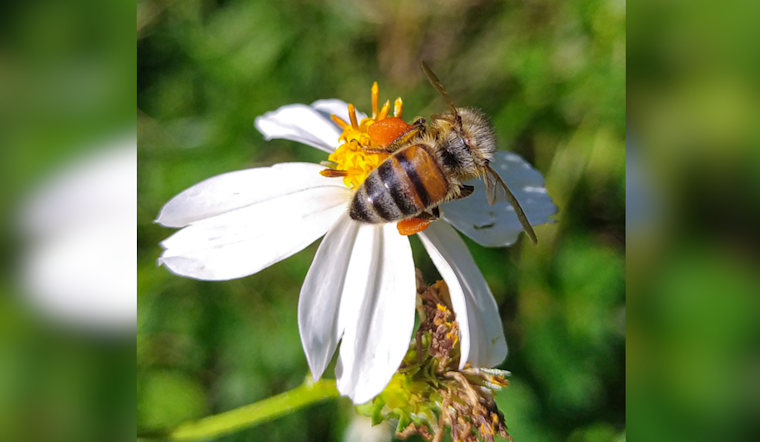
The Ohio Bee Survey, in its fifth year, is broadening our understanding of bee diversity with more than 330 bee species identified in the state. This initiative, driven by the Ohio Biodiversity Conservation Partnership (OBCP), is placing Ohio at the forefront of wildlife conservation.
According to the Ohio State University news release, data collection methods for the bee survey have involved passive water traps, which inadvertently also amassed an assortment of other insects. These unintended catches - flies, butterflies, spiders, ants, and more - have subsequently fostered a range of undergraduate research opportunities. One such project notably advanced the catalog of state hoverfly species counts, with Goodell mentioning, "We've now completed the largest hoverfly survey of Ohio. Prior to this, the most recent one was done 100 years ago."
The OBCP, since its establishment at Ohio State University in 2010 and under the direction of H. Lisle Gibbs, has demonstrated the power of collaboration between academia and the State Wildlife Grant Program. Each year, Ohio is allocated about $3 million through the program, and a significant share goes towards the partnership.
Besides the professional researchers and students, community scientists, including volunteers and retirees, have played a crucial role in the project's data collection efforts. Their contributions display the successful engagement of public interest in science and conservation. "There are quite a lot of people interested in pollinators in Ohio," Goodell remarked, as per the Ohio State University detailing the inclusivity of the initiative. Gibbs added, "You can leverage the interest of the general public, a cast of thousands, to collect data. That volume wouldn't be possible with a small team of three or four graduate students and a postdoc."





