

























































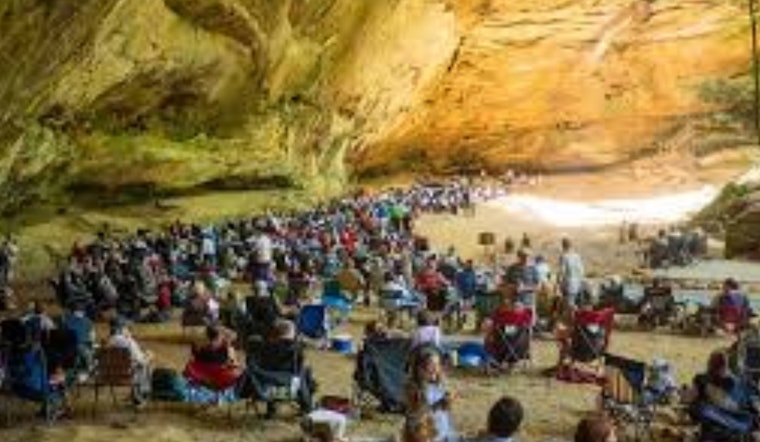
Hocking Hills State Park's Ash Cave has garnered a new layer of recognition with the unveiling of a historical marker courtesy of the Ohio Department of Natural Resources (ODNR). This nod to heritage not only honors the site's natural grandeur but also cements the human footprint marked in this storied locale.
Sequestered in the southernmost parts of the Hocking Hills, this largest recessed cave in Ohio is a horseshoe-shaped spectacle. Stretching nearly 700 feet across, with a 100-foot depth and height, Ash Cave can be accessed via a charming quarter-mile trail. The passage is lined with stately trees and seasonal flora, and in balmier times, you may witness a mesmerizing ice sculpture formed by freezing cascading water.
The ODNR's historical marker is a tribute to an expansive timeline, reaching back more than 300 million years. Back then, Ohio was submerged under shallow seas, and the eons saw sand and gravel settle and solidify into what we now call Black Hand Sandstone. The winds of time have since sculpted out the imposing cavern that continues to draw visitors from near and far.
ODNR Director Mary Mertz underscored the significance of this endeavor, stating, "Ash Cave is a place where Ohio’s natural beauty and human history come together in an extraordinary way," in a statement released by the Ohio Department of Natural Resources (ODNR). The marker isn't just a nod to the past, it's a beacon for future generations to appreciate the confluence of nature with human resilience and ingenuity.
Ash Cave's larger narrative envelopes both the geological marvel it is and the refuge it provided throughout history. Beyond the rocks and sediment, evidence of early indigenous peoples, like the Adena culture, were found within the cave in the form of ancient tools, pottery, and remnants of meals past, aligning with the campfires, ceremonial artifacts, or even saltpeter production stories that the mysterious 100-foot-long pile of ashes suggests. The ODNR pays tribute to all these layers, ensuring that Ash Cave's story is preserved and promulgated, illuminating a part of Ohio's heritage that has been significant for thousands of years.





