

























































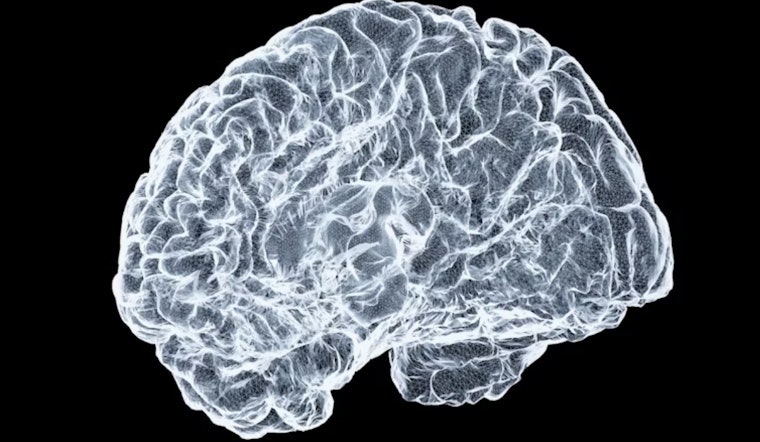
Charting the architecture of the human mind, researchers at The Ohio State University have provided new insights into how the brain's networking gives rise to its functions. In what is deemed the most comprehensive examination to date, the study examines the relationship between the brain's connectivity patterns and its diverse range of operations, as reported by OSU News.
While previous studies had pieced together the connectivity map for isolated brain functions, like perception or social behavior, lead author Kelly Hiersche and her team have cast a wider net. They have gleaned a "bird’s eye view" of the whole brain, laying out the intricate cabling system that dictates its functionality. Kelly Hiersche, the doctoral student who spearheaded the research, told OSU News, “We found evidence suggesting that connectivity is a fundamental organizational principle governing brain function, which has implications for understanding what happens when things go wrong in the brain.”
The study not only provides clues to the uniquely identifying "connectivity fingerprints" of brain regions but also lays the groundwork for distinguishing one region's function from another. An example, provided by senior author David Osher, paints a clearer picture of how different areas operate. Osher elaborated in a statement obtained by OSU News, “Our findings help us understand the connectivity pattern that makes a language area unique, for example, and what makes it different from adjacent areas in the brain.”
Utilizing the data from the Human Connectome Project, which encompassed MRI scans of 1,018 individuals, this Ohio State research promises to advance the understanding of the brain’s elaborate wiring. Each brain region, likened to possessing a fingerprint, processes functionality distinct from its neighbors, as stated by associate professor Zeynep Saygin. In an OSU News interview, Saygin mentioned, “Just like how everyone’s fingerprint is unique, we find that different brain regions have uniquely identifying connectivity fingerprints based on what mental function they perform.”
Published recently in the journal Network Neuroscience, the findings from the study underscore how the brain's various regions are each connected and functionally distinctive. As scientists dig deeper into the brain's connection patterns, they look to unravel the complexities that underpin both typical and atypical brain function. The revelations of this study not only shine a light on the usual traffic patterns of brain activity but could also provide a roadmap for diagnosing and understanding brain disorders where these pathways have gone awry.





