

























































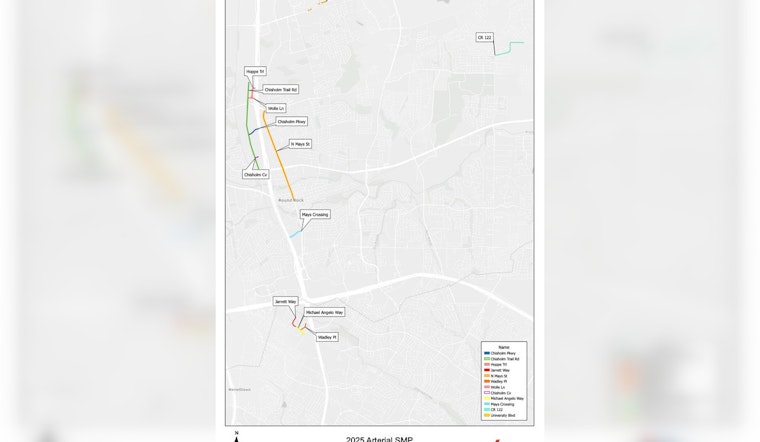
Round Rock City Council has greenlit a substantial investment for the city’s roadways, approving a $2.9 million contract aimed at overhauling several arterial streets, according to an official announcement on the City of Round Rock website. Discussed and passed at their Oct. 9 meeting, the contract enlists Texas Materials to conduct the maintenance work, that's targeting key routes including University Boulevard and North Mays Street, among others.
The financial move is part of a larger initiative, with the city consistently pushing funds into the upkeep of both arterial and neighborhood streets. Such maintenance work includes, but is not limited to, milling and asphalt overlay—essential in prolonging the life of the city's thoroughfares. Work is set to kick off in November this year, with a spring 2026 estimated wrap-up for the project.
As reported by the City of Round Rock, the contract will focus on improving roads like County Road 122, Hoppe Trail, Chisholm Trail Road, and several more. The earmarked repairs encompass a sweep of services such as pavement patching, as well as replacing damaged curbs, sidewalks, and driveway approaches. The streets undergoing maintenance have been selected based on their current structural condition, ensuring that the most necessary work is tackled promptly.
The larger picture painted by the Transportation Department's street maintenance program reveals over a decade of commitment to infrastructure, the city funneling more than $33 million in arterial street maintenance and $41.4 million in neighborhood street maintenance. Facing the daunting responsibility of managing over 1,150 lane miles, prioritization and systemized repair methodologies are key to the city's strategy in infrastructure management.
This financial injection reflects Round Rock's aim to provide better transit avenues for its citizens and, perhaps less overtly, underscores the city's recognition of the foundational role that infrastructure plays in both economic growth and public safety. These renovations and repairs serve not only as a functional improvement but also as an affirmation of the city's investment in development and the overall aspirational narrative of Round Rock's advancement.




