

























































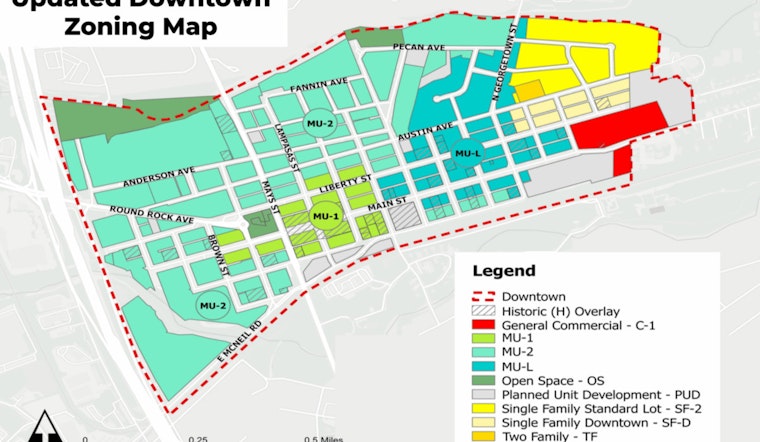
Round Rock's downtown area is set to see alterations following a pivotal vote by the City Council. On October 23, the council unanimously passed a series of ordinances targeted at redefining downtown zoning laws, a move that has been a decade in progress and is aimed at reshaping the cityscape. According to a release from the City of Round Rock, more than 100 downtown parcels will be rezoned to conform to these new standards, which are intended to foster a walkable, mixed-use environment.
The revisions are designed to balance the eclectic mix of retail, dining, and housing with historic preservation – something that has been a top priority for the council as reflected in their latest Strategic Plan. The assembled feedback through surveys, open houses, and workshops over the past year has helped to shape these updates. The City Council has strived to encourage development, keenly focusing on maintaining the area’s historic charm while looking to accommodate growth.
Four ordinances underpin the council's strategic move: amendments to Chapters 1, 2, and 8 of the Zoning and Development Code, rezoning of parcels to MU-2 (Mixed-Use Downtown Medium Density), MU-L (Mixed-Use Limited), and OS (Open Space) districts. This passage comes after the Planning and Zoning Commission’s recommendation, positioning the city to move ahead with the changes.
New guidelines will require that any new construction in the MU-1 (Historic Commercial Core) district must meet Historic Design Guidelines for Commercial Properties, with an emphasis placed on retail, restaurant, and entertainment spaces that may include upper-story residential options. The push for historical continuity extends, forbidding the introduction of new bars, although current ones can continue operations and transfer under specific conditions. An interesting shift to note is the green light given to bed and breakfasts, but with a clear no-go for vape shops and game rooms. In MU-2, which centers on higher-density mixed-use, updates include height limits and requirements for Privately Owned Public Spaces in larger developments.
The contrast in the MU-L district is clear, where the focus will remain on preserving the character of established residential areas. Changes here point to more relaxed standards for non-residential on-site parking and confinement of restaurants and event centers to Main and Georgetown streets. Echoing a broader trend in contemporary urban zoning, provisions for enrichment and wellness centers are now on the books, albeit with restrictions to safeguard the neighborhood's residential feel.
These sweeping amendments also include provisions for food trucks, landscape treatments, and expanded sign regulations – all tailored to work within the confines of this new downtown vision while aiming to preserve at least a semblance of the district's original character. The city relayed that after reaching out to owners of properties eligible for historic designation earlier this year, there’s been about a 10% uptake. The reassurance is that despite this growth tilt, existing historical landmarks — all 57 of them — will continue to be protected under the updated regulations.
As with any change, there's a transitional phase; existing structures and uses not conforming to the new standards are to be grandfathered as legally nonconforming. However, any future expansions will need to fall in line with these new regulations, which go into effect immediately. Moving forward, city staff will evaluate each development application against these criteria, in line with Round Rock’s vision for a downtown that's both vibrant and historically reflective.





