

























































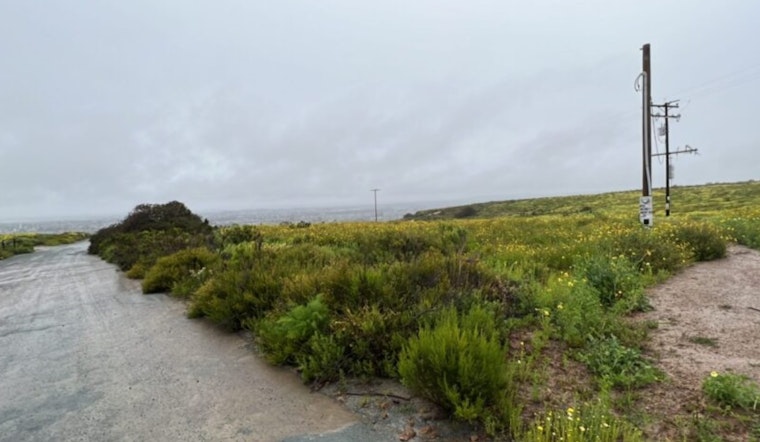
To address environmental concerns, the San Diego County Board of Supervisors stepped up measures to investigate soil contamination in the Tijuana River Valley. They have requested the State Water Resources Control Board to allocate $1.4 million towards a Sediment Quality Object Triad Analysis. This comprehensive method will test soil and sediment chemistry, toxicity, and ecological impacts at 11 sites stretching from Los Peñasquitos Lagoon to Famosa Slough, according to the County of San Diego.
The board's commitment to environmental responsibility doesn't stop with the funding request; they also directed a letter to the EPA Administrator for assistance in pinpointing hazardous chemicals that may warrant a federal Superfund designation. Efforts to expand the Air Pollution Control District’s Air Improvement Relief Program have already seen the distribution of over 6,800 air purifiers to homes affected by hydrogen sulfide emissions. Now, they are exploring the possibility of a health and feasibility study focused on hydrogen sulfide and other toxic gas concentrations near Saturn Boulevard.
Moreover, the County Office of Economic Development and Government Affairs examines the economic repercussions of the ongoing sewage crisis on small businesses, property values, and tourism—the sectors hardest hit by such environmental calamities. The collaborative approach adopted by the County encompasses government agencies, healthcare entities, academic institutions, community members, and environmental justice coalitions, marking a broad-based initiative to resolve the Tijuana River Valley distress.
Adding to its multi-pronged strategy, the County is pairing its efforts with a public health assessment by the CDC/ATSDR which, over the course of two years, will analyze the presence of hazardous substances, resulting health outcomes, and community concerns a resident-centric focus is evident through the availability of an interactive dashboard, where locals can keep tabs on beach water quality, air quality complaints, and the like, said dashboard is earnestly just a click away for those wrestling with the complexities of the polluted environment.


