

























































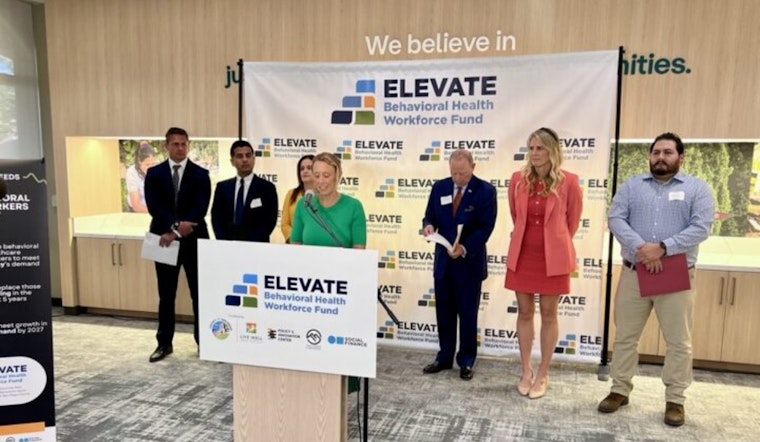
San Diego County's latest move to bolster mental health services is a $75 million injection aimed at growing the behavioral health workforce, an initiative that was set in motion yesterday. According to an article from the County of San Diego, the ELEVATE Behavioral Health Workforce Fund (ELEVATE) was established in partnership with the Policy & Innovation Center, Social Finance, Trailhead Strategies, and others, to introduce 3,000 new professionals. This comes after the County Board of Supervisors commissioned a workforce assessment 2022 that flagged the need for an additional 18,500 professionals by 2027 to meet the increasing demand for mental health and substance use disorder services.
The fund is rolling out five key programs designed to upscale the skillset of existing and future mental health professionals; these include zero-interest loans for graduate degrees through the San Diego Pay it Forward Loan Program, apprenticeships through the Behavioral Health Apprenticeship Network Program that can usher individuals into in-demand roles like SUD counselors there's also the Peer Support Training Grant Program, which is focused on providing training and job placement for certified peer support specialists in collaboration with Pacific Clinics and National Alliance on Mental Illness San Diego & Imperial Counties. Additionally, the Social Work, Therapy Counseling Internship Program and Nurse Practitioner Expansion Program offer paid internships and support for nurse practitioner students, respectively, in public behavioral health settings.
Individuals looking to venture into behavioral health or hoping to advance their careers can access details on these programs via the Elevate Behavioral Workforce Fund website. In light of the critical importance of mental health support, the county also reminds residents that immediate assistance is available by calling 9-8-8, which connects callers to the San Diego Access & Crisis Line, with trained crisis specialists on hand 24/7 and support available in over 200 languages.
Efforts like ELEVATE not only speak to the growing acknowledgement of mental health's pivotal role in overall well-being, but they also recognize the imperative need to bridge the gap between the demand for such services and the professionals available to provide them. As pointed out in the workforce assessment, the gap is a significant one, with statistics suggesting a shortfall that can only be addressed with strategic and well-funded responses such as ELEVATE, which aims to not only fill the current shortage but to anticipate and mitigate future insufficiencies.



