

























































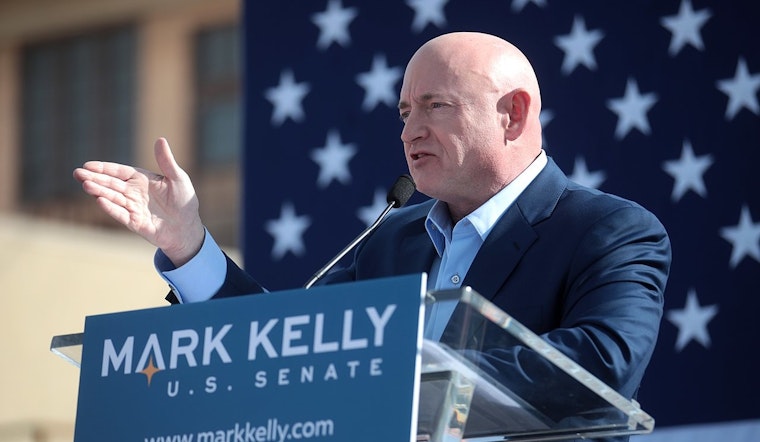
Recently, the Senate passed the Intelligence Authorization Act for Fiscal Year 2026, embracing several security measures spearheaded by Arizona Senator Mark Kelly. This bill, folded within the National Defense Authorization Act, shapes the frontier of America's intelligence and national defense strategies, taking a clear stance against threats, particularly noting the increased sophistication of adversarial actions from countries like China and Russia.
In a statement obtained by his Senate website, Mark Kelly elaborated on the legislation: "We’re making critical investments to protect Americans at a time when threats from adversaries like China and Russia are becoming more sophisticated." Kelly's efforts focused not just on traditional security measures but also on the integration of emerging technologies and the fortification of the U.S.-Mexico border against drug cartels using drones.
The bill extends its reach to various aspects of national and border security. For Arizona, particular, Kelly-led provisions include a measure to offer servicemembers counterintelligence briefings to better safeguard sensitive U.S. military knowledge. Additional amendments ensure Congressional oversight regarding access to classified intelligence community facilities and information, even if individuals do not hold a security clearance.
The Counternarcotics Enhancement Act, another Kelly-authored effort noted by his office, aims to promote U.S.-Mexico cooperation against powerful transnational drug networks, explicitly targeting the opioid crisis. Furthermore, the Intelligence Community Technology Bridge Act and the Drone Threat Assessment Act are tailored to enable the community to often adapt to new threats, focusing on technological integration and assessing drone-related vulnerabilities along the border.
The scope of the Intelligence Authorization Act extends beyond Arizona's immediate concerns, encompassing broad national security aspects. Provisions in the act deal with improving efficiencies within the Intelligence Community, tackling biotechnological threats, and promoting stringent guidelines for artificial intelligence deployment. It also features increased transparency measures, particularly towards Iran's nuclear ambitions, and new safeguards for the workforce, including a particular focus on whistleblower protections and health incident reporting standards.





.jpg)