

























































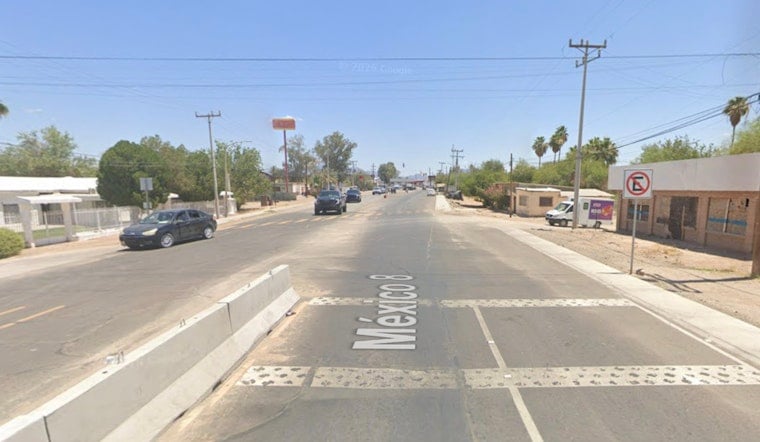
Crews have begun tearing up and rebuilding Highway 8, the lone paved road linking Arizona drivers to the beaches of Puerto Peñasco, after Mexico's federal government agreed to spend roughly $100 million on a full overhaul instead of a patch job. The project covers the entire 60-mile stretch between the Lukeville-Sonoyta border crossing and Rocky Point, and it comes after a rough stretch for the coastal town's tourism economy.
Sonora Governor Francisco Alfonso Durazo Montaño kicked off construction on September 2 at Encántame Resorts, just north of Rocky Point, calling it a historic day for the region. According to AZ Family, the work will replace the corridor from the ground up, adding wider lanes and new berms along the route that serves as the only paved connection between Arizona and Rocky Point. The existing highway will stay open throughout construction, and the project is expected to wrap up in May 2027.
What began as a modest 450 million peso plan for basic repairs ballooned into a 1.8 billion peso commitment — close to $100 million — after Durazo pushed federal infrastructure officials for a complete rebuild rather than a patchwork fix. Per El Imparcial, the original repair budget is being redirected to rehabilitate Sonora's Cananea-Agua Prieta highway instead.
A Difficult Year Behind the Push for a Full Rebuild
Puerto Peñasco city leaders said the deteriorating condition of Highway 8 was a major reason the town had such a difficult year, per AZ Family's reporting. Visitor numbers dropped from 1.9 million in 2024 to 1.6 million in 2025, and formal hotel bookings fell 20% over the same span. City leaders tied those declining bookings to an estimated $115 million loss in tourism economic impact — a striking figure given that Rocky Point's entire tourism economic output was only about $100 million in 2025, roughly matching the size of the highway investment itself, according to AZ Big Media.
That downturn didn't happen in isolation. U.S. Customs and Border Protection shut down the Lukeville-Sonoyta port of entry entirely for a month, from December 4, 2023, to January 4, 2024, to reassign personnel during a surge in migrant arrivals — a closure that forced travelers onto seven-hour detours and hit Rocky Point during the critical holiday season, according to The Gila Herald. More recently, weekend wait times at the same crossing have stretched two to four hours in 2025 and 2026, a bottleneck tied to strict 6 a.m.-to-8 p.m. operating hours and heightened Mexican National Guard vehicle inspections, per KJZZ.
What the Rebuild Actually Covers
The scope of the modernization goes beyond repaving the open highway. It also includes upgrading the main entry boulevard into Puerto Peñasco itself and repairing the connector road that leads directly to the Lukeville-Sonoyta border checkpoint, according to the same El Imparcial report. The work is being carried out in coordination with Mexico's Secretariat of Infrastructure, Communications and Transportation.
The Highway 8 project is also folded into a much larger initiative: Sonora's 3.4 billion peso, or more than $170 million, statewide road conservation program known as Plan Sonora, according to the Sonora state government. That same 2026 program also encompasses what officials describe as Latin America's largest solar power plant, located in Puerto Peñasco, whose first two phases reached full operation this past July.
Why Arizona Drivers Are Watching Closely
For Phoenix and Tucson residents, the drive to Rocky Point already runs roughly 3.5 to 4.5 hours each way — about 212 miles from Phoenix and 215 from Tucson via Arizona Highway 85 and the Lukeville crossing, according to Playabonita Resort. Highway 8 forms the final 62-mile leg of that trip and gives central Arizona its closest ocean beach access point, a shorter haul than the drive to Southern California's coast.
Winter is when that drive really pays off for the local economy. Puerto Peñasco's Convention and Visitors Bureau reports that November through February account for 47% of the town's annual visitor spending, with snowbird visitors staying an average of 12 nights compared to just 3.2 nights in summer, according to Encántame Resorts. Those Phoenix and Tucson drive-in visitors represent the primary market fueling that seasonal swing.
Drivers headed south should still expect some paperwork at the border. Travelers crossing at Sonoyta pass through a fiscal traffic light inspection system and must carry Mexican auto insurance, since U.S. policies aren't recognized under Mexican liability law, according to Casago. Uninsured drivers involved in an accident in Mexico can face detention until financial responsibility is sorted out.
Safety Guidance Remains in Place
The U.S. Department of State still maintains a Level 3 “Reconsider Travel” advisory for Sonora state due to crime, though it explicitly permits U.S. government personnel to travel to Puerto Peñasco as long as they drive during daylight hours on Federal Highway 8 from the Lukeville border port, per the agency's guidance. That corridor sits within Mexico's designated border “Hassle-Free” tourist zone.
The advisory reflects a broader pattern of caution around Sonora's highways. Hoodline previously reported on Arizona women killed in an armed attack in Sonora and on Arizona sisters targeted along the notorious Sonoyta travel corridor, both in 2024, underscoring why safety concerns have persisted even as officials work to modernize the region's main tourist route.




