

























































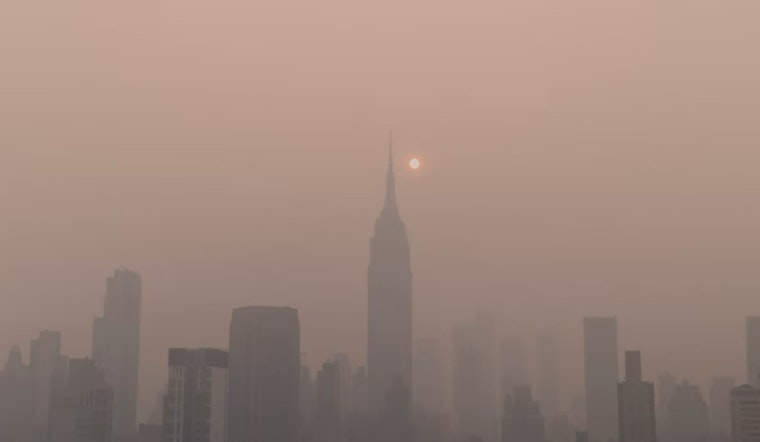
Researchers at the University of Washington have linked exposure to wildfire smoke with a decline in sperm quality, particularly concerning for men undergoing fertility treatments. KIRO7 reports that semen samples from 84 men who were part of intrauterine insemination procedures from 2018 to 2022 showed reduced sperm concentration and motility during periods of significant wildfire smoke events which were notably bad in 2018, 2020, and 2022.
During these smoky spells, the research documented declines in sperm concentration, total sperm count, and the count of movement-capable sperm, despite Seattle being a city that’s often considered a green haven, air quality plummets when wildfire smoke invades from the region, KXLY outlines a press release from UW Medicine that detailed consistent reductions in these critical sperm parameters whilst the smoke lingered over the city.
Dr. Tristan Nicholson, the assistant professor of urology at the UW School of Medicine, pointed to a slight increase in one measure of sperm motility but asserted it "was not enough to offset the overall reductions in sperm quality," as detailed in a study published in Fertility and Sterility and highlighted by KREM. The same study emphasized a need for further research about reproductive age and the recovery of sperm health post-exposure, indicating that the impacts of wildfire smoke on fertility are an escalating health concern with more frequent and severe wildfires on the horizon.
The data aligns closely with findings from earlier, smaller studies from Oregon Health & Sciences University, which connected air pollution and wildfire smoke to reproductive health challenges, KXLY notes. With the low pregnancy rate of 11% and live birth rate of 9% in the cohort of women with partners who were part of this study, the effects are far-reaching—the statistics provided by UW Medicine were consistent with the literature already present in the field of reproductive health. Looking forward, Dr. Nicholson expressed particular interest in understanding the resilience of sperm health post-smoke exposure, stating, "We are very interested in how and when sperm counts recover after wildfire smoke exposure," according to a prospective pilot study discussed with KREM.





