

























































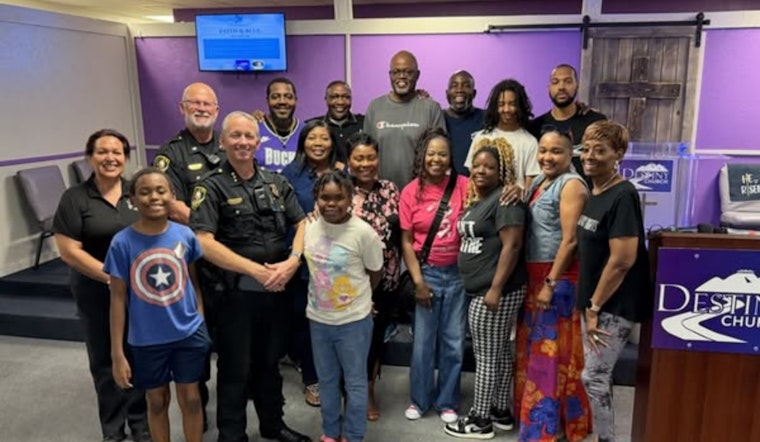
Last weekend, the White Settlement Police Department joined hands with Destiny Church of DFW to hold their annual Faith and Blue Weekend Service, an event aimed at fostering dialogue and trust between law enforcement and community members. The gathering, hosted by Pastor James Spencer, was described as a night filled with genuine discussions. "Thank you Pastor James Spencer for you and your team serving as excellent hosts," the White Settlement Police Department posted on social media, expressing their gratitude for the welcoming environment provided by the church.
The event is part of a nationwide initiative designed to bridge gaps between police and the citizens they serve through honest communication and shared experiences this initiative, while not unique in its aim, has found particular resonance in communities where tensions may run high due to past incidents or enduring social divisions, it seeks to open lines of communication where silence and suspicion might otherwise dominate. While specific outcomes are not always immediately visible, the hope is that consistent efforts like these will lay the groundwork for improved relations and mutual understanding.
Community-police engagement events like the one held with Destiny Church are increasingly recognized for their potential to humanize both officers and community members, breaking down barriers that so often lead to misunderstandings and conflict. They serve not just as a one-off occasion but as a commitment to ongoing dialogue and the cultivation of a shared sense of purpose towards safety and community wellness.
Participants at the Faith and Blue Weekend Service engaged in activities and conversations reflecting on collective safety, responsibility, and the role faith can play in bridging the gap between civilians and law enforcement, these types of engagements not only provide an avenue for expression but also act as a forum for police to hear from the community directly, gathering perspectives that might otherwise go unheard in formal settings. Creating sustainable change requires this kind of open exchange — a reminder that policing at its best is a partnership with those it serves.





