

























































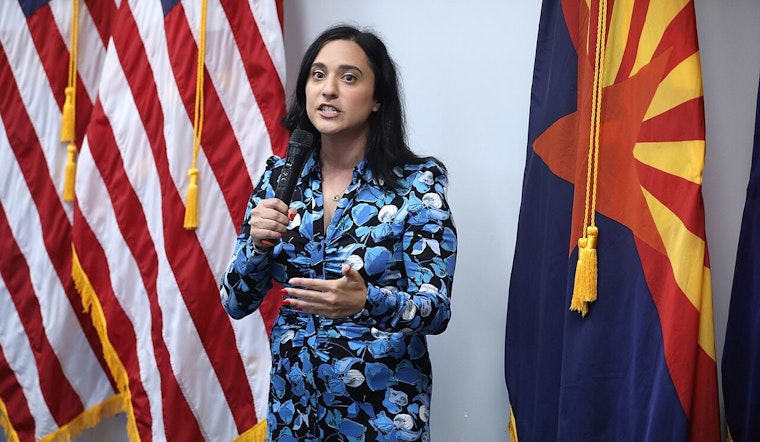
In a series of incidents hinting at a pattern of obstruction, U.S. Rep. Yassamin Ansari has continued to encounter resistance from ICE officials in her endeavors to scrutinize the treatment of migrants detained in Arizona's Eloy Detention Center. Rep. Ansari's efforts to speak directly with detainees about their conditions have been persistently hindered by the Trump administration, with a visit being abruptly canceled mere hours after it was approved, according to the Arizona Mirror. Earlier, on Nov. 5, the congresswoman visited the detention center to check on Arbella "Yari" Marquez, a green card holder who has lived in the U.S. for 25 years and suffers from leukemia, after a nine-month detention following a traffic stop, as reported by Fox 10 Phoenix.
Marquez's health has significantly declined during her time at the facility, Ansari told Fox 10 Phoenix, describing her loss of 70 pounds and observations of Marquez coughing up blood. "She is a cancer patient. She has leukemia. She has described vomiting blood. She has bruises on her legs. She is very sick." Ansari's failed attempts to arrange external medical treatment for Marquez have been met with delays, including a protracted wait for test results from ICE. The ACLU of Arizona, accompanying Ansari, has been vocal about their concerns over dire conditions in ICE facilities, which include reports of substandard water, neglect in medical care, and inhumane treatment of detainees—conditions that have led to the deaths of 20 individuals in ICE custody within the year.
Further setbacks emerged when Ansari's attempt to meet with migrants was thwarted, ICE's about-face occurring without elucidation. The email approving her visit, followed by its rescission, underscores the ongoing tension between congressional oversight and the executive branch's law enforcement agencies. Federal law permits members of Congress to visit detention facilities without prior notice, yet, new guidelines from DHS now require a 72-hour notice, a move criticized by Ansari as representative of the Trump administration's evasion of accountability. Ansari had planned to assess the living conditions of the detainees in response to a surge in complaints, concerns that included inadequate medical attention and even the withholding of sufficient air conditioning during extreme temperatures.
The congresswoman's crusade for transparency has been met with obfuscation and opposition, yet she persists in her battle for the constituents—especially those within her predominantly Hispanic district—suffering under the expanded enforcement and detention operations. ICE's reluctance to cooperate was made more evident by the administration's recent decision to shut down three DHS watchdog organizations, as per court documents cited by the Arizona Mirror. These included agencies that ensure civil rights compliance, aid in resolving immigration system issues, and oversee detention conditions. Despite Democrats in Congress introducing legislation to tackle concerns surrounding ICE's operations, the existing political landscape renders the passage of such measures uncertain.
As both reported by Fox 10 Phoenix and Arizona Mirror, Ansari's commitment to exposing the conditions within the Eloy Detention Center remains undaunted. She hopes to secure a visitation with the detained migrants and has yet to receive a response to her June letter to DHS. "If the Trump administration is not responding to members of Congress and denying us from meeting with our constituents I can only imagine — and I think Arizonans can only imagine what they are doing … behind closed doors and how they are treating everyday people," Ansari expressed. With regard to taxpayer funds, Arizona's residents are kept in the dark, particularly in the wake of a budgetary increase that buoyed DHS with $170 billion for immigration enforcement, of which a significant $75 billion allotment will go to ICE, solidifying it as the most well-funded law enforcement agency in the U.S. Despite this financial influx, ICE faces minimal scrutiny without the bolstering of corresponding oversight mechanisms.





.jpg)