

























































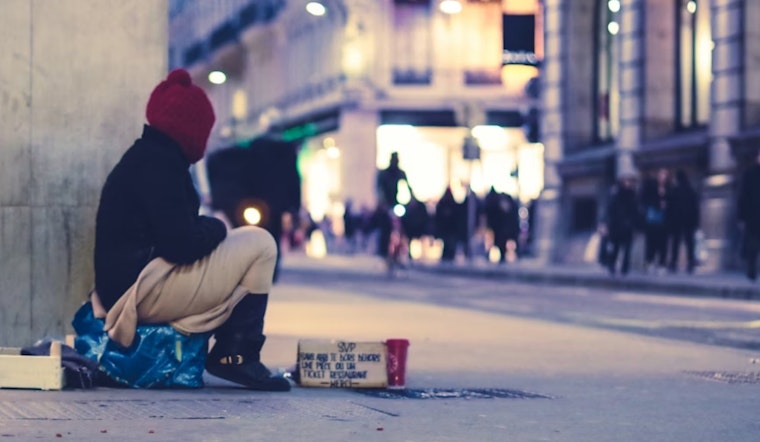
Last Friday, a group of Dallas civic and nonprofit leaders told a crowd at the George W. Bush Presidential Center that the city has to stop treating sidewalks as a stand-in for a housing system. Encampments, they argued, might be visible proof of the crisis, but the real work is building faster pathways into permanent homes and more coordinated services. Shelters, targeted outreach, and a centralized campus-style model are increasingly at the heart of that debate.
Harvard Club Panel And The Message
The Harvard Club of Dallas brought together Housing Forward CEO Sarah Kahn, Ashford senior managing director Mark Nunneley, and community leader Ikenna Mogbo, with Peter Brodsky moderating the "Crimson Conversations" event. Nunneley warned that sidewalks and underpasses cannot be the waiting room for people in crisis, according to The Dallas Express. The panel took place at the Bush Center, as listed by the Harvard Club of Dallas.
Street-to-Home And The Numbers
Housing Forward pointed to its "Street to Home" operation, launched in the summer of 2024, which concentrated outreach in three downtown zones and reported that Phase 1 rehoused 107 people. The coalition says it has placed more than 12,600 people across programs in recent years, according to Housing Forward. Kahn told The Dallas Express that Street-to-Home has helped "more than 7,400" people and that roughly 277 were rehoused from downtown encampments.
Citywide counts put the nightly homeless population in the mid-3,000s, and The Dallas Morning News reported a single-night count of about 3,541 people in May. Panelists said those numbers reflect some real progress in shrinking visible encampments, but also a stubborn shortfall in permanent housing options.
Shelters, Services, And Where Strain Appears
Speakers repeatedly stressed that Dallas shelters and service partners are running at or near capacity and that emergency beds on their own will not end homelessness. The Bridge Homeless Recovery Center, the city’s largest recovery shelter, operates around the clock and reports routinely high bed utilization, according to The Bridge. Panelists also highlighted behavioral health as a pressure point, noting that organizations such as Metrocare provide crucial clinical support for people with complex needs, per Metrocare.
A Campus Model And The Bottom Line
Several speakers urged Dallas to closely study a "transformational campus" similar to San Antonio’s Haven for Hope, described as a one-stop campus that combines shelter with case management, medical care, and workforce services, according to Haven for Hope. Housing Forward has framed the effort as a long-haul public-private project that will require significant investment to scale. The coalition has discussed roughly $30 million in public-private support to expand Street-to-Home across the region, according to Housing Forward.
Panelists said the math is not complicated: without more subsidized housing, rental assistance, and living-wage work, short-term sweep-and-shelter tactics simply shift people from one block or encampment to another.
Bottom Line
The Harvard Club forum wrapped with broad agreement on one central point: sidewalks are not a system. Leaders left calling for targeted funding, more coordinated clinical care, and a housing pipeline big enough to absorb the people who are now being pulled off the street. To keep downtown counts down, panelists argued, Dallas will have to match its outreach wins with actual homes, ongoing services, and the political will to deliver both, and it will have to do it soon.





