

























































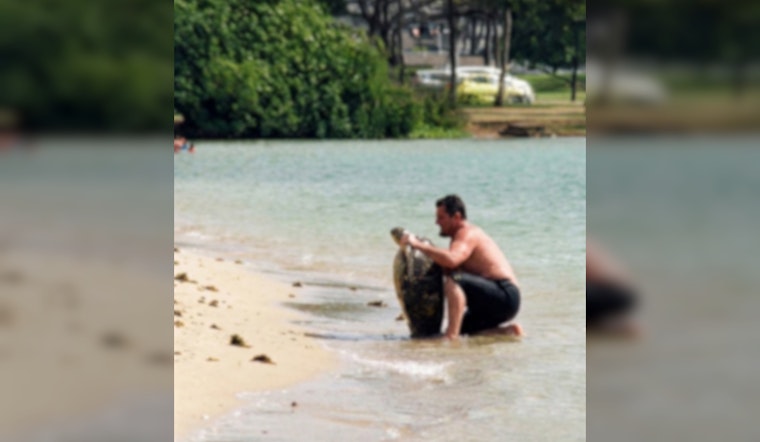
A viral video showing a man lifting a Hawaiian green sea turtle for a tourist photo has reignited concerns about wildlife harassment in Hawaii, where despite years of protection efforts and clear warnings, violations against protected marine species continue to plague the islands' beaches.
The incident, captured on video and posted to TikTok by @itsbleuworld last week, shows a man grabbing a honu—the Hawaiian name for green sea turtle—from the sand and holding it upright while a woman snaps a photograph. After the photo op, he drops the turtle back onto the beach and pats its shell. The video has sparked widespread outrage across social media platforms, with the footage being reposted on Instagram's HHHNewz account where it garnered over 400,000 views and nearly 3,000 comments, according to Surfer.
@nbcnews Officials in #Hawaii ♬ original sound - nbcnews
Investigation Underway in East Honolulu
Jason Redulla, enforcement chief for Hawaii's Division of Conservation and Resources Enforcement, believes the incident occurred in East Honolulu near the Hawaii Kai area based on the video's background. "Knock it off. Respect our wildlife as you would the wildlife where you come from," Redulla told Hawaii News Now, adding that many visitors come to Hawaii relaxed and don't fully consider the consequences of their actions.
Conservation officers have taken a report and are in the early stages of their investigation, though no suspects have been named or taken into custody. The Department of Land and Natural Resources (DLNR) confirmed that multiple witnesses on the beach reported the incident to officials.
A Pattern of Persistent Violations
This latest incident is far from isolated. Earlier this year in March, actresses China and Sierra McClain created a social media firestorm after posting a video of one sister touching a sea turtle while the other filmed. The Instagram post by China McClain, who has more than seven million followers, drew tens of thousands of likes and over 2,000 comments before being removed following multiple phone calls and emails from DLNR to the sisters' managers, publicists, and production companies, as reported by DLNR.
Marine biologist and North Shore resident Terry Lilley painted a disturbing picture of the situation at Laniakea Beach, known as "Turtle Beach," where hundreds of visitors crowd the small area daily. According to KHON2, Lilley reported witnessing people "riding turtles, petting turtles, kicking turtles, throwing rocks at turtles" and described lines of thousands of people that prevent sea turtles from leaving the water to rest on the sand.
Legal Consequences and Protection Status
Hawaiian green sea turtles are protected under both state law and the federal Endangered Species Act, making any form of harassment illegal. Violations can result in misdemeanor charges carrying penalties of up to one year in jail and fines starting at $250 for a first offense, according to enforcement officials. Federal penalties can be even more severe, with fines reaching up to $10,500.
The green sea turtle population in Hawaii has made a remarkable recovery after being hunted nearly to extinction by the 1900s when they were commonly found in every Honolulu market and restaurant. According to DLNR's Division of Aquatic Resources, the species was officially protected in 1978 under the Endangered Species Act, and their conservation status was recently downgraded from Endangered to Least Concern by the International Union for Conservation Nature in October 2025, indicating population recovery.
Cultural and Ecological Significance
The disturbance of honu strikes a particularly sensitive chord in Hawaiian culture, where these ancient creatures have inhabited the islands' waters for millions of years and hold deep spiritual significance. Some Native Hawaiians view green sea turtles as their deities or 'aumākua, worshiping and caring for them, while others historically raised them in fishponds for consumption or carved their bones into ornaments and fishhooks.
"These turtles have been here millions of years," marine life advocate Melina Clark emphasized to multiple news outlets. "The more people who don't show care or teach others how important they are to the islands, the more harm we'll keep seeing. Locals care. Hawaiians care."
Ongoing Challenges Despite Education Efforts
State officials stress that incidents like this aren't rare despite posted signs, established viewing guidelines recommending at least 10 feet of distance, and extensive outreach campaigns conducted over many years by NOAA, the U.S. Fish and Wildlife Service, and DLNR. Volunteers at popular turtle viewing spots like Laniakea Beach work daily to maintain safe viewing areas with roped-off sections and educate visitors about protection laws.
Beyond the legal ramifications, officials warn that approaching sea turtles is dangerous. While honu may appear calm and docile on the beach, they have powerful beaks capable of causing serious injuries.
The DLNR encourages witnesses of wildlife harassment to report violations immediately through their 24-hour DOCARE hotline at (808) 643-DLNR or via the free DLNRTip app, where reporters can remain anonymous. According to a March Hoodline report, officials have expressed frustration when violations are only shared on social media rather than reported directly to authorities who can take action.
As this investigation continues, the incident serves as yet another reminder that protecting Hawaii's marine wildlife requires constant vigilance and respect from both residents and the nearly 10 million annual visitors to the islands.





