

























































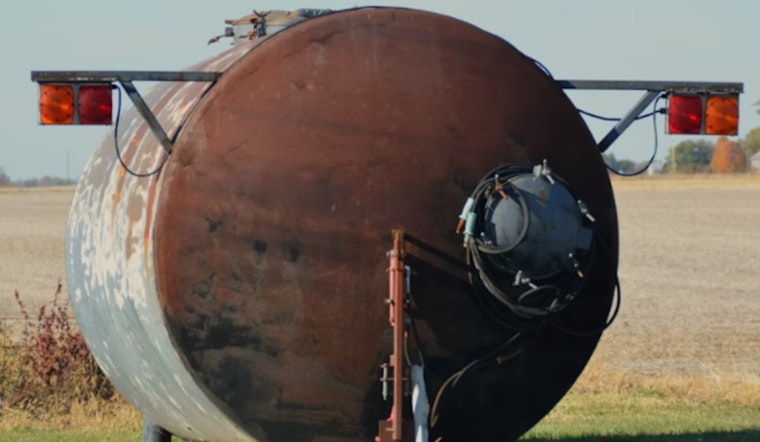
Maui is installing a 30,000-gallon water storage tank and a 10,000-gallon helicopter dip tank at Māʻalaea this week to provide water near likely fire areas. The effort is part of a plan to pre-position supplies in remote, drought-prone locations so air crews can respond to fires faster.
Lance DeSilva, the Department of Land and Natural Resources’ forest management supervisor on Maui, said Māʻalaea was chosen because, “We have fought fires there many times over the years.” County data shows the Maui Fire Department responded to 555 blazes, including more than 200 forest and brush fires, between January 1 and September 30. Assistant Chief Alexander Parker said pre-positioned water can reduce helicopter turnaround time, noting that “a lot of times, the success or failure of an operation — when it comes to helicopters — is turnaround time,” according to Honolulu Civil Beat.
Funding for fire safety has increased since the August 8, 2023 wildfires, with the Department of Fire and Public Safety’s budget rising by over $25 million and $9.8 million planned in 2026 to buy equipment including tanks. County and state teams plan to place tanks at about 10 to 15 locations with limited water access. The county also bought a 10,000-gallon rolling dip tank from a Seattle company for around $18,000, saying, “It’s kind of a trial run,” as officials test mobile versus fixed systems. County crews are focusing on South Maui, while DLNR is targeting West Maui and higher elevations, as reported by Honolulu Civil Beat.
Why Tanks Matter
Natural water sources are shrinking. Maps from the U.S. Drought Monitor show much of Maui County in moderate to severe drought, cutting down the ponds and reservoirs helicopters can reliably tap. That scarcity makes pre-filled tanks especially valuable in places where roads, terrain, or limited infrastructure slow water access.
What Officials And Residents Are Saying
Local mitigation groups call staged water one more tool in a layered defense. The Hawaii Wildfire Management Organization lists Launiupoko’s Gordon Firestein among trained Firewise leaders, underscoring how neighborhood efforts on Maui have long centered on mitigation, local water access, and community readiness.
How The Tanks Work
Portable dip tanks — often called “pumpkins” — and larger framed units play different roles: pumpkins are smaller and can be hauled close to an incident, while fixed or roll-on tanks hold far more water for repeated helicopter dips. The USDA Forest Service’s technical guidance on helicopter dip tanks catalogs common portable and framed systems, showing many portable units in the 3,000–5,000-gallon range, while framed or fixed installations can be much larger.
Officials say the tanks improve readiness but don’t replace firefighters or mitigation efforts. The county and state are still mapping ideal sites and testing which mix of fixed and mobile tanks provides the best coverage across Maui’s varied terrain.




