

























































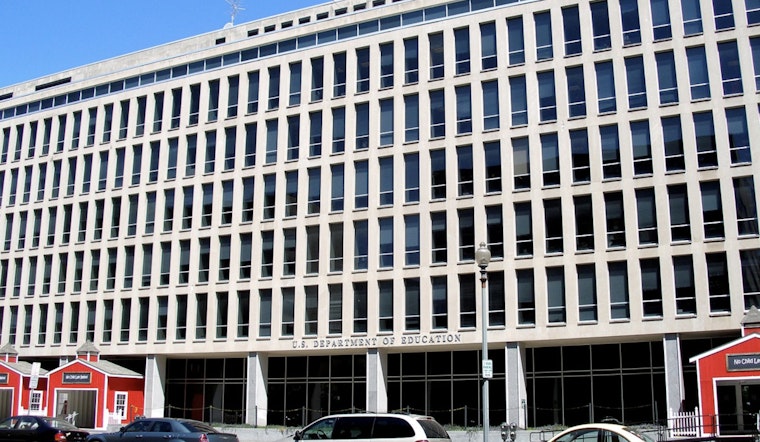
New York Attorney General Letitia James is leading a charge along with 21 other state attorneys general against the U.S. Department of Education (ED) and Secretary Linda McMahon. The group has filed a lawsuit challenging a new federal rule they claim could restrict access to the Public Service Loan Forgiveness (PSLF) program for many public servants. This litigation springs from concerns that the rule could disqualify state governments, hospitals, schools, and nonprofit organizations from the program based on a determination that they engage in activities disapproved by the current administration.
"Public Service Loan Forgiveness was created as a promise to teachers, nurses, firefighters, and social workers that their service to our communities would be honored," James said in a statement on November 3rd, as reported by the Attorney General's Office. The controversy surrounds a newly finalized rule that appears to allow the Department of Education to unilaterally to declare various public entities ineligible for the PSLF program if they partake in what is labeled as "substantial illegal purpose." This term is a bone of contention, as it is not specifically found in the PSLF statute's language and is open to broad interpretation by federal authorities.
Since its establishment in 2007 by Congress, the PSLF program has been integral in supporting those who serve the public, effectively erasing the burden of federal student loan debt after ten years of qualifying service. The program is seen as key in promoting careers in important public sectors by lessening the financial strain these paths often entail. The PSLF program, thus far, has forgiven the loan debt of more than one million public servants across the United States, with thousands of these benefits occurring in New York.
The legal argument poised by James and her coalition counterparts is that this rule deviates noticeably from the intended purpose of the PSLF program. Activities that might trigger an organization's exclusion from the program under the new rule could, according to the attorneys general, reflect political leanings: supporting immigrants, providing gender-affirming care, promoting diversity, equity, and inclusion initiatives, or partaking in political protest. The attorneys warn that if this policy were to stand, many public servants could abruptly find their PSLF eligibility revoked due to their employers falling out with the prevailing political winds in Washington, D.C.
As part of their legal challenge, the attorneys general are seeking the court to label the new rule as unlawful and to prevent its implementation. The group's contention holds that the rule brings forth arbitrary conditions, relinquishing control to the Department of Education to apply undefined standards to an established statutory program, which they argue is both "arbitrary and capricious" in nature, as per the Attorney General's Office.
In solidarity with their cause, a group of private plaintiffs and local governments have also initiated a lawsuit with the aim to halt the enforcement of the new PSLF rule. The attorneys general are teamed up from Arizona, California, Colorado, Connecticut, Delaware, Hawaii, Illinois, Maine, Maryland, Massachusetts, Michigan, Minnesota, Nevada, New Jersey, New Mexico, Oregon, Rhode Island, Vermont, Washington, Wisconsin, and the District of Columbia, alongside Attorney General James, in opposing what they perceive as a politicization of a program intended to uphold a commitment to public service.




