

























































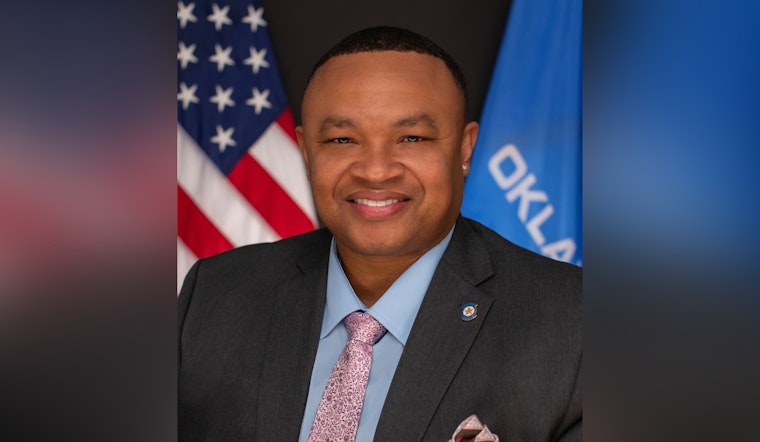
In a move that's raising eyebrows and hackles alike, the federal government has scrubbed Missing & Murdered Indigenous People (MMIP) resources from their agency websites—a decision that Representative Ronald Stewart, D-Tulsa, is not taking lying down, according to a statement on the Oklahoma House website. Stewart calls the action a "direct assault" on Indigenous communities, asserting that the information and resources are vital to addressing the ongoing public-safety crisis that sees Indigenous individuals, particularly women and girls, murdered or going missing at a rate exponentially higher than the national average.
Stewart's dismay is rooted in the federal government's characterization of the Office of Missing & Murdered Indigenous People as extraneous, supposedly a “DEI initiative,” the implication is that such initiatives are nonessential, unnecessary, however Stewart counters with an unequivocal rebuttal stating that such claims are not only dangerously off mark, but dismissive of the real and documented need for the office's existence—and the vital role it plays in streamlining information sharing and improving law enforcement responses.
The legitimacy of MMIP goes beyond partisan division, having been cemented in bipartisan legislation like the Savanna’s Act and the Not Invisible Act, both enacted in 2020, which Stewart emphasized have mandated federal agencies to tighten their data collection and investigative protocols; these requirements are not optional, and compliance is mandatory. Furthermore, they are not elements subject to DEI policies, according to the Oklahoma House website.
Contrary to being a diversity checkbox, the MMIP office provides tangible support to victims and families dealing with the unending nightmare of unresolved disappearances and murders—services that are both practical and trauma-informed in nature where the commitment arises from thousands of families who have suffered the injustice of cold cases and lost loved ones without remedy for generations the office's mission stands as a testament to the dire need for federal attention and action.
Stewart's statement underscores a history of extensive Tribal advocacy for federal partnership on MMIP, a response to a chorus of sovereign Tribal Nations calling for accountability, in Oklahoma, Stewart expressed gratitude for the bipartisan state efforts that reflect a commitment to making the state a safer place for Indigenous community members, but challenged the federal level's recent decision as one that undermines the value of Indigenous lives, concluding "Removing MMIP resources from federal websites sends one message: that Indigenous lives are expendable. That message is unacceptable, and it is beneath the dignity of this nation," as mentioned on the same news.





