

























































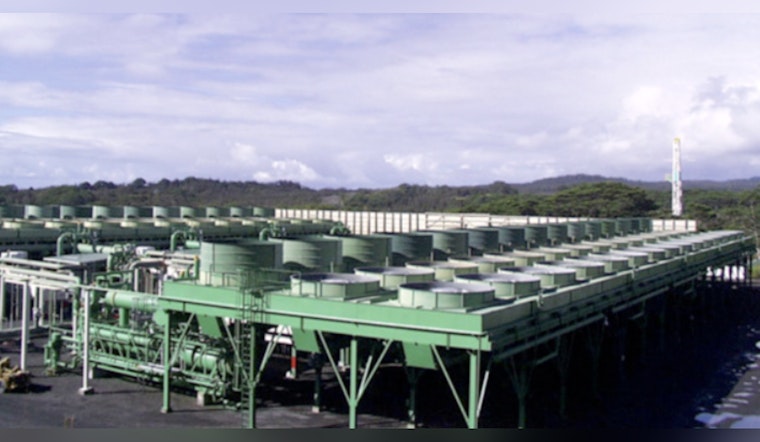
Puna Geothermal Venture wants to squeeze more juice out of its Pāhoa plant, asking state regulators for permission to bump output by 5 megawatts, from 41 MW to 46 MW, as part of a repower that the company says will improve efficiency and cut costs. The state Department of Health has already posted a draft permit amendment and will take public testimony at a hearing in Pāhoa on Dec. 8, with written comments due by Dec. 12. Company officials are telling residents the upgrade would swap out older generating gear for fewer, higher-capacity units, while keeping most of the existing buildings and infrastructure intact.
What PGV Is Proposing
The draft amendment would let PGV permanently retire a dozen existing power-generating modules and replace them with three higher-capacity Ormat Energy Converters, according to the Hawaii Department of Health. Two of the new units would be roughly 15 MW (net) each, and the third about 16 MW (net), which would lift the plant’s nominal capacity to 46 MW. The amendment would also increase the number of authorized geothermal wells from 14 to 28. Health officials say the permit change updates equipment and operational descriptions in the facility’s Noncovered Source Permit and adds new identification and reporting requirements.
New Equipment, Emissions And Safety Measures
PGV’s repower would install closed-loop binary systems using cyclopentane, along with new heat exchangers, air-cooled condensers, and vapor-recovery equipment, plus a 39,500-gallon maintenance storage tank. The draft permit also shifts the Sulfa-Treat system to intermittent use, adds updated leak-detection and gas-sensor controls, and is estimated to reduce volatile-organic-compound emissions by about 6.36 tons per year. Most support buildings and the gathering system would remain in place, though some new equipment would be installed in a different location, Big Island Video News reported.
Rates, Jobs And Community Reaction
Plant officials have told local media that electricity from PGV now runs about 7 cents per kilowatt-hour and could drop to around 4 cents once the new equipment is online, a shift they say would make PGV’s contract one of the lowest-priced power sources on the island. Coverage in the Honolulu Star-Advertiser also quotes Ormat’s senior director for Hawai‘i affairs, saying the plant supports about 30 living-wage local jobs, and notes that company officials expect the department to sign off on the current air-permit request and related filings.
Permitting Timeline And How To Weigh In
The Department of Health has scheduled a public hearing for 6 p.m. on Dec. 8 at the Pāhoa Neighborhood Facility and will accept written comments through Dec. 12. The agency says it will factor in comments on compliance with state and federal air-quality standards before making a decision. The draft permit, the permit review summary, and the full administrative record are available online through the DOH Clean Air Branch, which is also inviting comments on any potential impacts to Native Hawaiian traditional and customary rights. The DOH Clean Air Branch public notices explain how to submit testimony and where to review the application materials.
Why It Matters For The Island Grid
PGV has long been a major source of dispatchable renewable power for Hawai‘i Island. Before the 2018 Kīlauea eruption, the plant supplied roughly a third of the island’s electricity, a share that made geothermal central to local reliability planning. Reporting and utility filings say the repower is aimed at restoring and modernizing that baseload role, in a way that advocates argue could lower costs and bolster the grid when solar and wind production dip. For more on upcoming meetings and background on the project, residents can look to the company’s community page and earlier coverage from Big Island Now.





