

























































The University of Hawaiʻi Center for Oral History has secured four grants totaling $538,000 to record the stories of Maui communities still living through the aftermath of the 2023 wildfires, from Lahaina survivors to Native Hawaiian water rights advocates in Nā Wai ʻEhā. The funding will pay for oral history projects focused on recovery, cultural continuity and environmental history across West and Central Maui.
The largest single piece of the puzzle is the Lahaina Memories Project, which will fund up to 100 hours of interviews with residents navigating the aftermath of the fires, according to Maui Now. Of those hours, 60 will be led by trained educators, youth and community members, with the Hawaiʻi Community Foundation's Maui Strong Fund contributing $250,000 toward the effort. That fund has raised more than $212 million from 240,000 donors across 78 countries since August 2023, committing over $182 million toward local housing, healthcare and community resilience programs, Hoodline previously reported in its coverage of a recent remembrance event.
Water Rights and a Rebuilt Temple Get Their Own Grants
A separate $159,000 grant from the National Endowment for the Humanities will support the Echoes of Wai initiative, which calls for 30 planned interviews capturing historical and future perspectives on water across West Maui and Nā Wai ʻEhā, per the same report. Nā Wai ʻEhā, meaning “The Four Waters,” was historically Hawaiʻi's largest continuous wetland kalo cultivation area, and in June 2024 the Hawaiʻi Supreme Court issued a landmark ruling ordering state water officials to enforce public trust and Native Hawaiian water rights over plantation-era diversions, according to Earthjustice. Local community groups had fought a 20-year legal battle to restore natural streamflows before that ruling came down.
The National Endowment for the Humanities also provided $29,000 for the Lahaina Jodo Mission Oral History Project, which is capturing memories to assist the mission's rebuilding efforts. Founded in 1912 for Japanese plantation workers, the mission features a 12-foot, 3.5-ton bronze Amida Buddha statue cast in Kyoto in 1968 to mark 100 years of Japanese immigration to Hawaiʻi, and the statue survived the 2023 wildfire even as temple structures burned, according to Go Hawaii. It was actually the second time the mission's main sanctuary had been destroyed by fire, following an earlier 1968 blaze that prompted congregation members and community volunteers to rebuild the temple and pagoda, as reported by Hawaii Public Radio. Minister Gensho Hara has served the historic mission for over 60 years.
A Fourth Grant Focuses on Women of Color
Rounding out the portfolio, the American Council of Learned Societies provided a $100,000 Digital Justice Grant to highlight the history of women of color on Maui. The program, funded by the Mellon Foundation, awards up to $100,000 to humanities projects that use ethical digital tools to engage historically marginalized communities, according to Opportunity Feed.
Mary Kunmi Yu Danico, director of the University of Hawaiʻi Center for Oral History, said the four projects document Maui's people, places, environments and institutions during a critical period of transformation, per Maui Now's report. The center itself was created by the Hawaiʻi State Legislature in 1976 as the Ethnic Studies Oral History Project, tasked with documenting, preserving and publishing recollections of Native Hawaiian and multi-ethnic island communities, according to the UH Center for Oral History.
Storytelling Alongside Physical Rebuilding
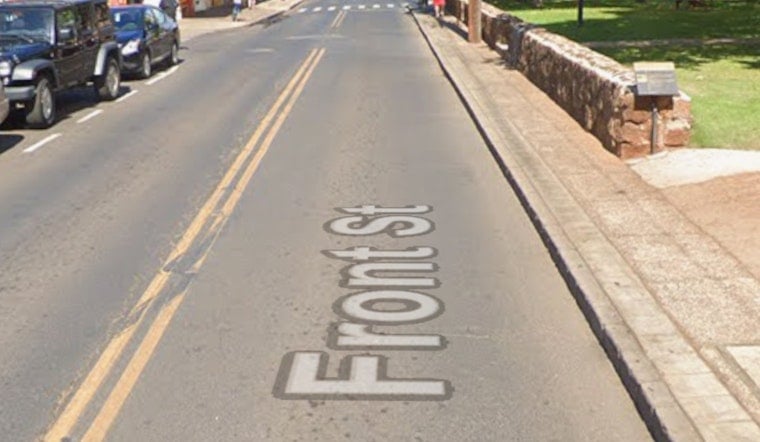
The oral history push arrives as West Maui reaches tangible milestones in its physical recovery. The County of Maui Office of Recovery reopened historic Front Street in Lahaina to vehicular traffic on August 1, following three years of debris cleanup, seawall repairs and infrastructure reconstruction, according to Huakaʻi Lūʻau. Commercial businesses like Kimo's restaurant have since reopened along the corridor.
The August 8, 2023 wildfires killed at least 102 people and destroyed more than 2,200 structures, mostly residential homes, making it the deadliest U.S. wildfire in over a century, per The Weather Channel. Fire temperatures reportedly exceeded 1,000 degrees Fahrenheit in central Lahaina. That scale of loss is the backdrop against which the new oral history grants aim to preserve memory before it fades.
The oral history center's work joins other community storytelling efforts already underway in West Maui. Hoodline reported this month that the Maui Public Art Corps and Lahaina Restoration Foundation launched an animated film project built from oral histories of nine Lahaina residents, permanently archived with StoryCorps at the Library of Congress. Story gatherers on that project received trauma-informed psychological first aid training, a precaution likely to guide the new UH-led interviews as well given the sensitivity of asking wildfire survivors to relive 2023.
Housing recovery has also moved forward on a parallel track. In July 2025, the Maui Strong Fund partnered with Maui County and Hawaiʻi Community Lending to commit $15 million in direct grants and recoverable loans to help wildfire-impacted homeowners rebuild lost residences, according to the Hawaiʻi Community Foundation. Between the rebuilt homes, the reopened storefronts and now the funded interviews, Maui's recovery is being written down in more ways than one.



