

























































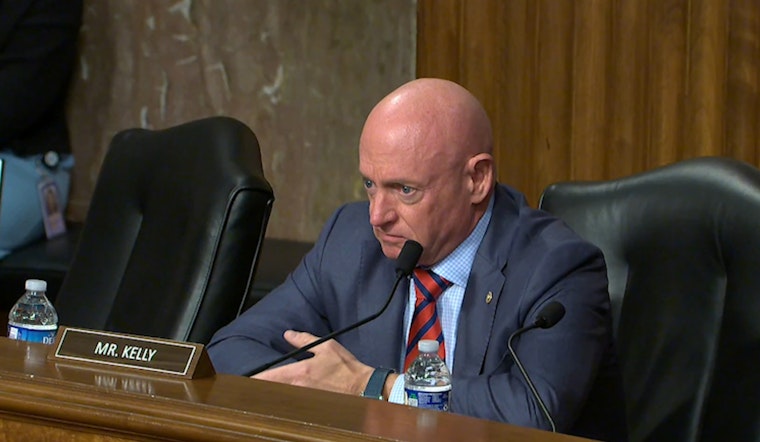
During a Senate Armed Services Committee hearing, the subject of resumed nuclear testing under the Trump administration was front and center, with Arizona Senator Mark Kelly leading the charge in seeking clarity. As reported by Kelly's Senate page, Kelly, himself a Navy combat veteran, pressed Dr. Robert Kadlec, nominated to be Assistant Secretary of Defense for Nuclear Deterrence, Chemical, and Biological Defense Policy and Programs, on the potential gains and risks involved in restarting nuclear testing.
Bringing a level of skepticism towards the strategic use of nuclear tests, Kelly highlighted the disparity between the number of tests conducted by the U.S. and China, suggesting a resumption could disproportionately benefit China. "We have tested, conducted more than a thousand nuclear tests. […] The Chinese have done tests maybe 40 times," he continued, emphasizing the possible strategic edge this might give to China in building a more reliable nuclear triad. Despite multiple opportunities, President Trump has not provided clarification on his comments about testing, leaving experts and policymakers to speculate on his intentions.
Dr. Kadlec responded with a breakdown of potential motivations for testing: technical uncertainties, qualifications of the nuclear enterprise, and geopolitical context. However, he distanced current discussions from the president's ambiguous statements by referencing ongoing State Department compliance reviews regarding Russia and China's adherence to the threshold test ban treaty. While he did not disclose classified insights, Kadlec acknowledged the multifaceted nature of the current strategic environment, which extends far beyond the bounds of testing itself to include modernization and development of asymmetric capabilities by adversaries.
In light of advanced delivery systems and hypersonic missiles, Senator Kelly emphasized the urgency of forming a strategy to defend the homeland. "You combine that with hypersonic missile systems on different trajectories, and the challenge that we would face from those." In a rapidly evolving arena of strategic competition, particularly with China, the unclear policy on nuclear testing seems to provide more questions than answers at a time when definable stances are crucial. Echoing the concerns, Dr. Kadlec promised to commit to understanding presidential directives on this subject, should his nomination be confirmed.





