

























































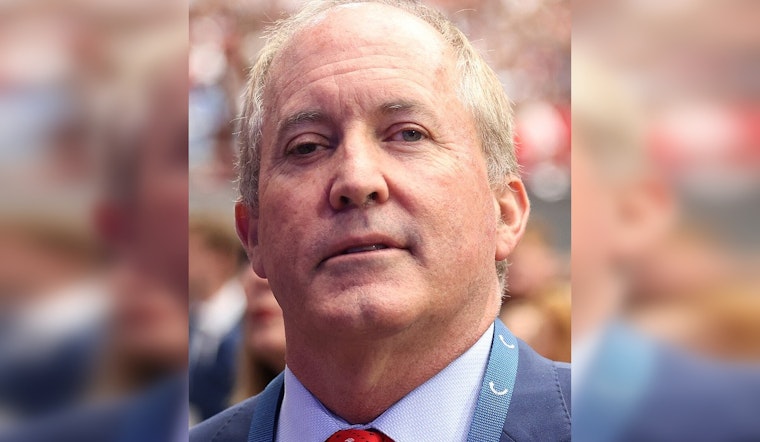
Texas Attorney General Ken Paxton is throwing a wrench into the workings of college sports' governance with a strong advisory to Texas universities. According to KXAN, Paxton urged higher education institutions not to sign an agreement with the College Sports Commission (CSC). This move is intended to empower the schools to legally challenge potential punishments that may come from the agency, which has been tasked with ensuring fair compensation for student-athletes under new revenue-sharing models and Name, Image, Likeness (NIL) agreements.
Paxton's primary concern is that the agreement would significantly limit the universities' autonomy, subjecting them to the CSC's authority and penalties with what he considers insufficient recourse. Questioned by Paxton, in a statement obtained by KXAN, he described the agreement as an "illegitimate" extension of the CSC's reach. The attorney general also called out clauses that would penalise schools for supporting legal actions taken by other entities, including state officials or even student-athletes themselves.
Moreover, Paxton's stance on the issue could be a major stumbling block for the College Sports Commission. As reported by Front Office Sports, the agreement is contingent on all 68 power conference schools signing on, which now seems less likely with Texas schools being coerced into not signing. CSC, aiming to build a sustainable enforcement system, regards signing as a logical step following schools' proactive decision to participate in the system either through revenue-sharing opt-ins or settlement agreements.
Other voices are joining the chorus against the CSC's approach, with Texas Tech University System's Chairman of the Board of Regents, Cody Campbell, echoing Paxton's apprehensions. In a message shared via his X account, which was cited by KXAN, Campbell expressed Texas Tech University's reluctance to sign the agreement. He called for a dialogue to discuss and develop a workable solution. Meanwhile, Paxton labelled the agreement as "unlawful" and flagged that it contained "one-sided measures" in his letters to schools. Specifically, he pointed to future fines and penalties that the CSC could impose without proper mechanisms for schools to challenge these rules or punishments.
The backlash from Paxton and other state officials puts the CSC in a delicate position. Their desire to create a unified system of enforcement across major universities is clear, yet convincing the power players in Texas seems increasingly challenging. The CSC's previous statement, referenced by Front Office Sports, painted the agreement as an essential follow-through for universities, meant to fulfil earlier commitments. But with the Dec. 3 deadline approaching, and the Texas AG's firm opposition, the future of this agreement remains uncertain.



_(cropped).jpg)