

























































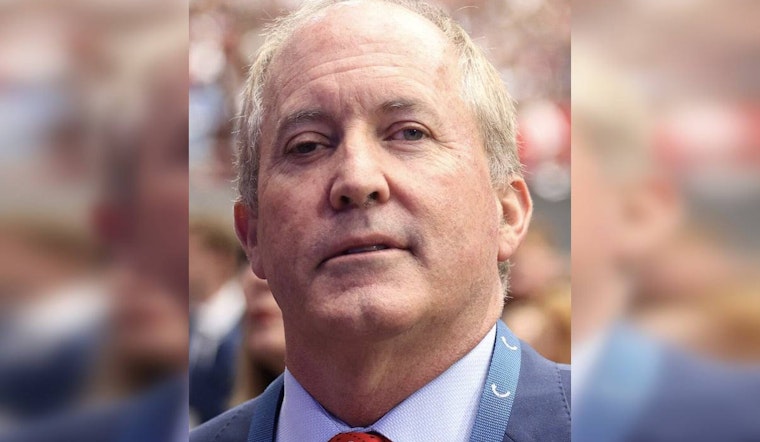
Texas Attorney General Ken Paxton has taken to the highest court in the land to defend the state’s Congressional maps, which have sparked a fierce legal battle over their legitimacy and fairness. In a case that could affect the political landscape in Texas, Paxton filed a reply with the Supreme Court of the United States, seeking to overturn a lower court's injunction that froze the implementation of the state's congressional map, as reported by the Office of the Attorney General.
According to a statement put forth by the Office of the Attorney General, the appeal was made to SCOTUS following a district court's injunction, which Attorney General Paxton and his advocates quickly sought to stay. Justice Alito, moving with a speed that underlines the urgency of the matter at hand, granted an administrative stay mere hours after the filing—an action that is at once decisive and indicative of the contentious nature of these proceedings. The legal fracas continued with responses from liberal plaintiffs in SCOTUS, to which Paxton's office has now replied.
Defending the congressional maps is for Paxton a stance against what he calls an attempt by "the radical Left to abuse the judicial system to steal the U.S. House." In a narrative that casts this struggle as a necessary pushback, Paxton articulates his commitment to "defending our state’s right to draw our own maps," as quoted from the Office of the Attorney General's news release. He asserts the view that the maps reflect an accurate representation of Texas’s conservative electorate, affording a damping of the voices that accuse his party of gerrymandering and racism.
Paxton’s defense challenges the idea that redistricting must be ideologically fair, a topic that has long caused debate. He argues that “Blue states have gerrymandered their districts for decades” and says Texas’s current efforts are political strategy, not racial or partisan gerrymandering. His argument relies on comparing Texas’s actions to what other states have done in the past, as per the Office of the Attorney General.





_(cropped).jpg)