

























































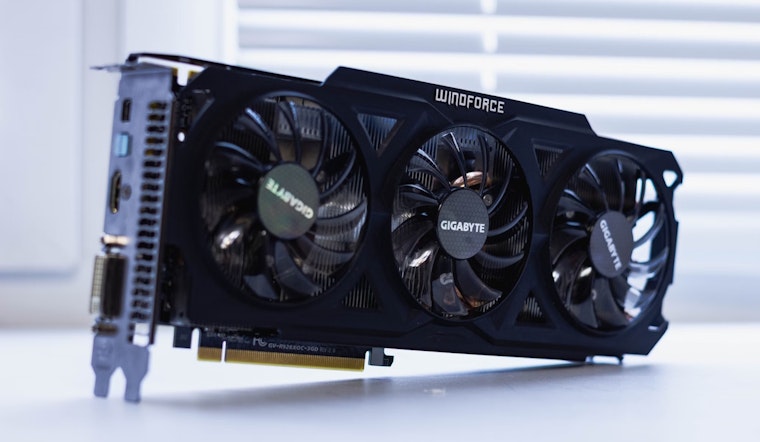
UT Austin just bulked up its AI horsepower. The university’s Center for Generative AI has doubled its computing muscle, pushing its cluster past 1,000 GPUs — a major lift for researchers training large models and tackling data-heavy work in medicine, vision and language.
The upgrade was announced Monday, with part of the purchase funded by a $20 million appropriation from the Texas Legislature, according to UT News.
“This is a game‑changer for open‑source AI and research in the public domain, not only at UT but throughout academia,” Adam Klivans said to UT News. He added that the scale will allow researchers to create solutions to bigger real‑world problems and to better understand model behavior and sources of bias.
Where the extra compute lives
The expanded cluster runs at the Texas Advanced Computing Center on its Vista system — an AI‑focused setup that pairs NVIDIA Grace and Hopper architectures and uses high‑bandwidth interconnects for training large models. TACC says Vista is in full production and delivers the GPU and storage performance needed for modern foundation models, according to the Texas Advanced Computing Center.
What it means for UT researchers
The Center for Generative AI gives UT faculty and students priority access to train and experiment at a scale most campuses can’t match, the Machine Learning Laboratory says. That access makes it possible to build models “from the ground up” — a capability researchers say is key for interpretability, reproducibility and domain‑specific work in computational biology and medical imaging.
Open access and the bigger picture
While the center prioritizes UT users, TACC’s systems — including Vista — are part of a national open‑science network. Allocations to Vista are available to the wider research community through programs like Frontera and the NAIRR pilot, according to the Texas Advanced Computing Center. That blend of dedicated campus compute and shared national resources positions Austin as both a local hub and a node in federal AI research infrastructure.
University leaders say the upgrade will help UT compete for larger grants, draw students and move faster on projects that need scale with transparency. For Austin, the expansion underscores the Forty Acres’ place in the escalating national race for AI talent and infrastructure.





