

























































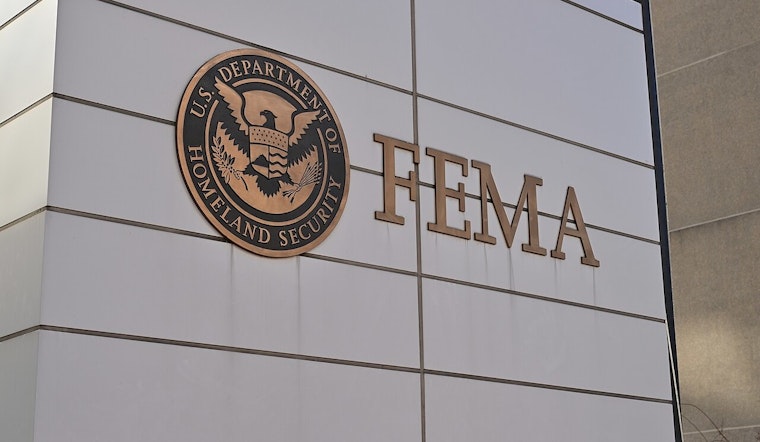
The potential relocation of the Federal Emergency Management Agency's (FEMA) headquarters from Washington, D.C., to Texas is on the table, a move favored by the Trump administration and one that could reshape the top tier of disaster response in the United States. This comes amid recent leadership changes, with Politico reporting Monday that acting FEMA Administrator David Richardson resigned to rejoin the private sector, a shift that will see FEMA chief of staff Karen Evans stepping up as the acting administrator starting December 1st.
As reported by CBS Austin, the move is partly designed to accommodate Nim Kidd, the current head of the Texas Division of Emergency Management. Kidd, who has been interviewed by Trump for the FEMA leadership role, has expressed his commitment to Texas, declining to take the helm of the national agency. Over his career, Kidd has become known for deftly managing multiple large-scale emergencies, most recently the Hill Country floods and the previous year's Panhandle wildfires.
According to a report by Politico, critics of the potential move say it could present "huge challenges" in terms of coordination with the Department of Homeland Security, FEMA's supervisory body. The proximity to D.C. is considered essential by many for smooth operations and efficient disaster response.
Kidd's expertise was thrust into the national spotlight following devastating flash flooding in central Texas. In a statement obtained by Politico, a reviewer praised Kidd as "widely respected" and emphasized his "extensive experience running one of the nation’s largest disaster agencies." However, concerns regarding the feasibility of a centralized emergency response agency being more physically detached from its oversight arm cannot be ignored.
This proposal comes amidst allegations from Republicans in 2024 that FEMA officials had withheld aid based on political affiliations, a claim that was debunked as an isolated incident. Yet, the Trump administration's own Department of Homeland Security raised similar concerns this year. As discussions continue, the future of FEMA—be it in Texas or Washington—remains an ongoing dialogue about the intersection of politics, efficacy, and leadership in the nation's disaster readiness and response.



