

























































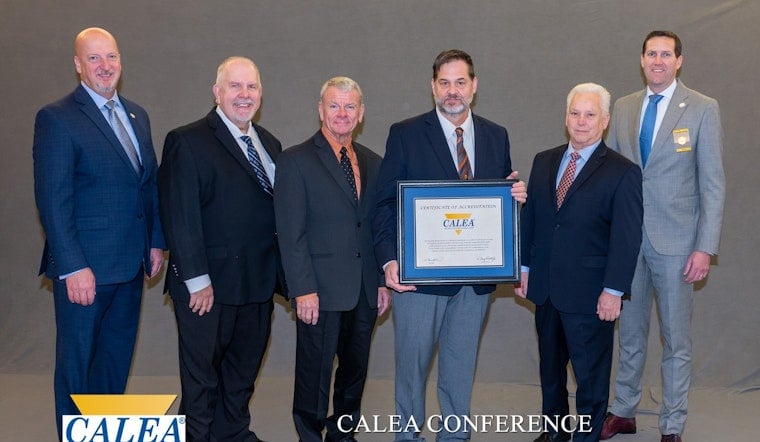
The Tulsa Police Department has again met the standards of a prestigious credentialing authority, marking nearly two decades of continuous accreditation. The recent announcement, shared on the department's social media, indicates that the Commission on Accreditation for Law Enforcement Agencies (CALEA) has once more recognized the department for its adherence to the highest standards in public safety.
Originally receiving CALEA Accreditation in Advanced Law Enforcement in 2005, the Tulsa Police Department has strived to maintain this distinction, now culminating in an unbroken record of 19 consecutive years. While earning reaccreditation, the Tulsa Police Department Public Safety Communications (911 Center) has also upheld its CALEA accreditation since 2016, after being recognized for achieving industry benchmarks of efficiency and service.
CALEA accreditation is obtained through a rigorous two-phase process. Departments must first undergo a thorough review of their policies and proofs of compliance, followed by an on-site assessment. In line with CALEA's methodology, the department is subjected to interviews, observations, and a comprehensive verification to generate a final report for the Commission's consideration. "CALEA accreditation verifies agency compliance through a two-phase process: a review of policies and proofs, followed by an on-site assessment involving interviews, observations, and verification that results in a final report to the Commission," says the Tulsa Police Department on their social media post.
Maintaining CALEA accreditation requires continuous oversight, including annual internal audits, public status notifications, and a full reaccreditation review every four years. These measures ensure that agencies such as the Tulsa Police Department not only achieve but also uphold industry standards aimed at ongoing improvement. To keep those standards current and effective, CALEA periodically updates them through a formal process that includes review and revisions by the Standards Review and Interpretation Committee, opportunities for public comment, and final approval by the Commission.




