

























































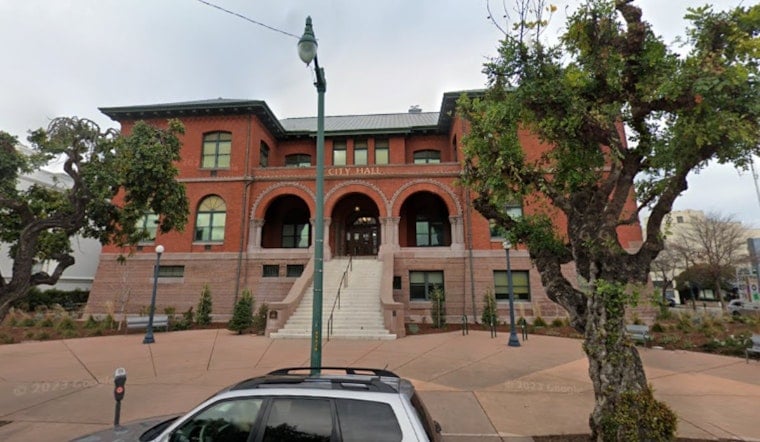
Alameda County is trying something bold - and a little bit plug-and-play - to speed up affordable housing on small city lots. The county has launched a first-in-the-state pilot called the Scalable Housing Investment Funding Toolkit, or SHIFT, that leans on pre-approved, repeatable building designs to cut both time and cost. The goal is to turn underused infill parcels into 4-to-16-unit buildings for residents earning roughly 60 to 80 percent of area median income.
How the SHIFT pilot works
The county’s Housing and Community Development Department has put out an RFP for architecture firms to create standardized, pre-permitted plans that can be dropped onto tight or irregular parcels with minimal customization. Each design is meant to be scalable in the 4-to-16-unit range and then published as an open-source template so other cities and counties can reuse the plans without starting from scratch, according to Alameda County HCD.
County staff say the playbook will lean on recent state rules such as SB 9 and SB 4 to enable ministerial approvals and avoid lengthy discretionary reviews. In theory, that should mean fewer public hearings and more shovels in the ground.
Costs, scale and who it’s for
Officials have set an all-in development cost target of about $600,000 per unit, with the homes reserved for households earning around 60 to 80 percent of the area median income. That $600,000 benchmark is well below what many new Bay Area affordable projects currently cost on a per-unit basis, but still a heavy lift for small-lot infill construction. Bay City News via SFGate reported the county’s cost and income targets.
Who’s building it
To get the pilot off the ground, county leaders tapped Oakland-based Inspired ADUs to help assemble both the initial SHIFT projects and the broader design library. According to The Mercury News, the first SHIFT buildings are expected to break ground in late 2026 as Alameda County tests the toolkit on compact infill sites.
Experts weigh in
County staff estimate there could be potential demand from more than 9,000 Alameda County households for the kind of small multiunit buildings SHIFT is designed to support. Coverage of the program also cited a 2025 state Housing and Community Development estimate that the county needs many more affordable units overall to steady the local housing market.
Lindsay Maple of UC Berkeley’s Possibility Lab told The Mercury News that the new approach fits within what she called “the abundance agenda,” a push to significantly increase housing supply. At the same time, she said she was “cautiously optimistic” about how easily the SHIFT model could be copied in places with different land costs and zoning rules.
Big questions remain
Standardized plans might give builders a head start at city hall, but they do not erase two big barriers: the price of land and the challenge of assembling enough financing. Analyses of recent Bay Area projects show per-unit costs stacking up in the several-hundred-thousand-dollar range, and local studies, including an Oakland task-force report, put typical new-construction costs near or above $600,000 per unit. That context sets a high bar for SHIFT’s $600,000-per-unit target, first reported by SFGate, and underscores how tough it will be to bring costs down meaningfully.
The cost backdrop is detailed in the Oakland task-force report, which offers local figures that mirror what many developers have been saying for years.
Next steps and where to look
For now, Alameda County is in full procurement mode. Officials are soliciting proposals, holding bidder conferences and preparing to publish both the design library and a single-source funding toolkit once partners are officially on board. If the pilot hits its design, cost and permitting milestones, the county says the first full builds could begin in late 2026.
Developers, architects and housing advocates can track the details through the SHIFT RFP and timetable posted by Alameda County HCD, which is serving as the program’s clearinghouse.





