

























































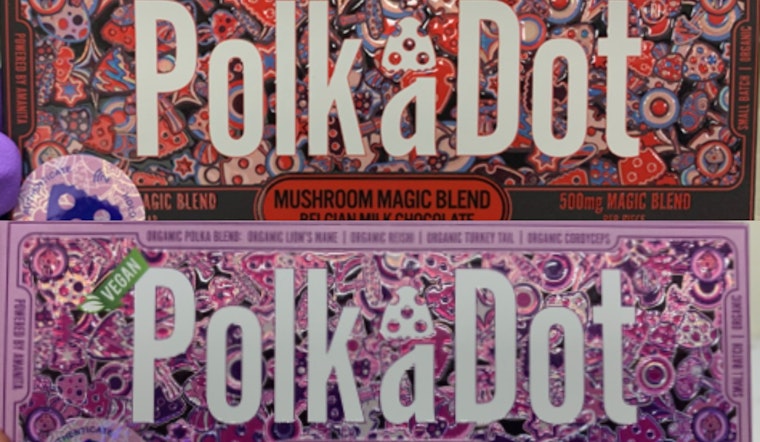
California health officials are sounding the alarm over a popular "magic mushroom" brand, warning that TRE House gummies, chocolate bars and syrup tested positive for synthetic psychedelic compounds and should not be eaten. The California Department of Public Health (CDPH) says the adulterated products can cause severe adverse health effects, including hospitalization and even death, and the alert covers all TRE House items regardless of lot number or packaging date. Officials say distribution likely stretched across California and into other states.
In a press release reported by the Santa Barbara Independent, CDPH said laboratory testing found 4-acetoxy-DET (4-acetoxy-N,N-diethyltryptamine) in TRE House chocolates, gummies and syrup, and that most samples also contained 4-acetoxy-DMT (4-acetoxy-N,N-dimethyltryptamine). The agency described both chemicals as illegal psychedelics and warned that products sold as "microdose" blends can pack a far more powerful punch when they are secretly adulterated. CDPH noted that no illnesses had been reported as of its statement but urged extra caution because the products look like ordinary candy and syrup that children could easily ingest.
TRE House markets the line as a "magic mushroom" product made with legal nootropics and adaptogenic mushrooms, and the company posts Certificates of Analysis on its product pages stating the items do not contain psilocybin or psilocin. TRE House’s website also lists business contact details and a Chatsworth address, putting the firm squarely on regulators' radar as state lab results now clash with the company’s labeling and public claims. Retailers that bought the products are left in limbo over whether they unknowingly sold unsafe, mislabeled foods or were themselves misled by upstream manufacturers.
State investigators move to trace distribution
CDPH says it is investigating the TRE House brand owner in Chatsworth and the contract manufacturers that produced the items, and that more than 1,000 pounds of TRE House gummies have already been embargoed and voluntarily destroyed. According to the press release, the parties responsible could face additional enforcement, including civil or criminal penalties, depending on what investigators find. Officials also warned that the products were sold to smoke shops and online retailers and urged sellers to pull any TRE House items from their shelves immediately, according to the Santa Barbara Independent.
Why mislabeled 'shroom' edibles can be dangerous
Compounds like 4-acetoxy-DMT and 4-acetoxy-DET are chemically related to psilocin, which is listed as a Schedule I substance under federal regulations. That classification helps determine how investigators treat undisclosed psychoactive ingredients. Under the Federal Analogue Act, unscheduled chemicals that are substantially similar to listed Schedule I drugs and intended for human consumption can be treated as illegal, a legal tool that has shaped past cases involving adulterated edibles.
Public health investigators point to the 2024 Diamond Shruumz outbreak, in which mislabeled mushroom edibles were tied to hundreds of illnesses and several deaths, as a stark reminder of what can happen when powerful psychoactive compounds are slipped into products without honest labeling.
What to do if you have TRE House products
CDPH is asking anyone who spots TRE House items for sale to call the CDPH Complaint Hotline at (800) 495-3232 or file an electronic report with the CDPH Food and Drug Branch. Consumers who have eaten the products and feel sick should contact their health care provider or call Poison Help at 1-800-222-1222. As with other recent adulterated edible investigations, the agency stressed that the warning covers all TRE House products, regardless of lot numbers or date codes printed on the packaging.
Legal and enforcement risks
Notices like this usually signal that companies could face fines or legal action if investigators determine products were intentionally adulterated or mislabeled, and prosecutors have previously relied on federal analogue and controlled substance laws in similar cases. At the same time, any legal outcome will hinge on what investigators learn about how the products were manufactured, distributed and labeled. CDPH says it will keep digging and coordinate with local and federal partners as needed.
Until state investigators release more detail on specific lots or retailers, public health officials say the safest move is to treat any TRE House-branded magic mushroom gummies, chocolate bars or syrup as potentially dangerous and to report them to state authorities so investigators can track and remove suspect supply chains.




