

























































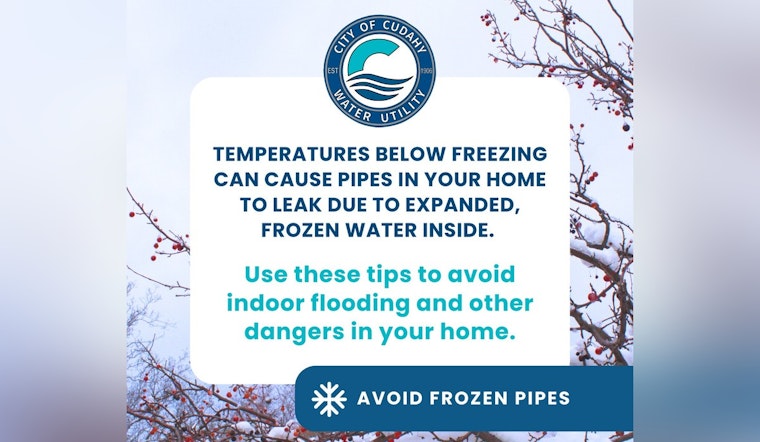
As the mercury dips, residents are scrambling to protect their homes from the costly and inconvenient consequences of frozen pipes. The City of Cudahy has stepped up with a timely reminder for homeowners, offering sage advice on how to prevent water pipes from giving in to the frigid clutches of below-freezing temperatures.
The precautionary measures, detailed on the City of Cudahy's website, include knowing the locations of your home’s shut-off valves and thoroughly wrapping water pipes in vulnerable areas such as attics, basements, and garages. Special attention should be given to outdoor hoses, which should be drained, removed, and properly wrapped, the guide suggests. Foundation vents should also be sealed to prevent drafts, with a reminder to reopen them in spring to help prevent dry rot.
But what if the damage is done and you find yourself dealing with an uncooperative faucet that barely manages a trickle? "IMMEDIATELY CLOSE THE MAIN SHUT-OFF VALVE TO AVOID FLOODING," warns the city. For those who can't, the Cudahy Water Utility offers assistance – though it'll cost you. And for the actual thawing of pipes, they offer a series of do's and don'ts, emphasizing that open flames or blowtorches are a definite no-go due to the risks of pipe explosion and carbon monoxide poisoning.
City officials are advising residents on how to safely thaw frozen pipes. The recommended method is to keep the faucet open while applying heat using towels soaked in hot water, an electric heating pad, or a hair dryer—ensuring there’s no standing water nearby. Authorities strongly warn against using kerosene or propane heaters indoors, as they pose serious safety risks and are ineffective. Once the pipe has been warmed, residents should carefully turn the water back on and monitor for any leaks, according to the City of Cudahy.
Following these steps is crucial for protecting homes during the cold snap. Residents are encouraged to follow the guidance closely and stay in contact with local services if professional assistance is needed. By taking these precautions, homeowners can help ensure their heating systems remain functional while keeping water flowing safely through their pipes.





