

























































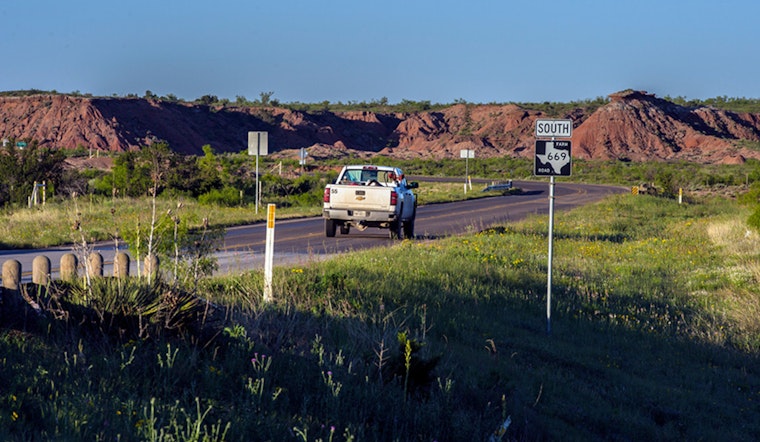
Embarking on a journey through Texas means navigating a sprawling network of roads that each carry a unique flavor symbolic of the state's largeness and love for the peculiar. The Texas Department of Transportation (TxDOT) presides over the nation's largest highway system, inclusive of a dizzying variety of designations that can sometimes perplex even the most seasoned traveler. For those wondering, "FM" refers to Farm-to-Market roads, and "RM" stands for Ranch-to-Market, as noted in a recent TxDOT release.
An examination into this network divulges more than 3,400 FM and RM routes peppered throughout the state, crucial since 1937 in connecting agricultural communities to broader markets. While most routes bear the FM designation, a choice selection, numbering 176, are termed RM, primarily found in parts of the Texas Hill Country and areas to the west. Michael Chamberlain, director of data management in TxDOT’s Transportation Planning and Programming Division, reported to TxDOT that the distinction between the two types of roads may be a mere backdrop of cattle versus cotton fields lining travelers' views.
In addition to the FM and RM web, there's an exception in the mix: Ranch Road One. Living a solitary existence, this road leads to the LBJ Ranch, underscoring Texas' penchant for the distinctive. Major roads like the Dallas North Tollway defy intuition as they traverse the compass in both directions, and you might be beguiled by Interstate designations like I-35E, which, contrary to appearances, does not lead east.
Loop highways in Texas have their own tale, often used affectionately but not always fitting the mold of their name. Houston's I-610 is locally enshrined as "The Loop," and San Antonio's I-410 has been embraced as "Loop 410," despite various state highway loops that travel in decidedly straight lines. Austin’s MoPac, formally known as Loop 1, cuts right through the heart of the city, while Tenaha boasts the diminutive Loop 168, claiming fame as Texas' shortest highway at just a block's length, well, in a statement from TxDOT.
For those who mean business, Texas roadways cater with business routes uniquely their own, often demarcated with small letters that denote a town's pecking order along a highway — a mixture of practical navigation and good old-fashioned Texas road trivia. And for the interstate traveler, Texas commands the board with 25 interstate highways — more interstate miles than any other state, affording robust access across its vast expanses.
If planning a Texas odyssey, whether choosing an FM route for a rural jaunt or hopping from one town's business loop to another, practical assistance awaits at Drive Texas, which provides real-time traffic updates to ensure a journey as smooth as the asphalt that lies beneath wheels. With such a colorful tapestry of routes, Texas highways truly incarnate the state's unique character — from practical connectors to quirky designations, each mile tells a story of the Lone Star State's soul.





